MSMEs need uniform electricity rates, water and wages across the country
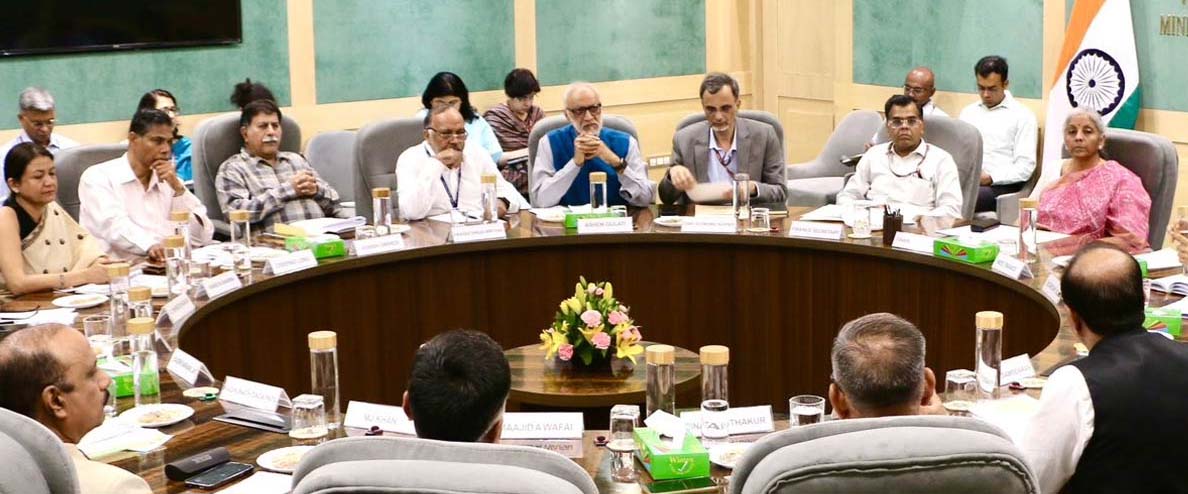
Apex Chamber of Commerce and Industry, which represents more than 65 Industrial Area Associations and thousands of MSMEs in NCT-Delhi, has written a letter to the Union Finance Minister giving several MSME-focused suggestions for consideration in the Union Budget 2026. Apex Chamber President Kapil Chopra, Vice President Raghuvansh Arora, General Secretary Sunil Chaddha, and other office bearers stated in the letter that MSMEs contribute 30% to India’s GDP, 45% to manufacturing output, 48% to exports, and provide employment to more than 110 million people. Therefore, strengthening this sector is essential for national goals such as Atmanirbhar Bharat, Make in India, and Viksit Bharat 2047. They have given the following suggestions for its improvement:
The letter stated that despite continuous reform efforts, the compliance burden on MSMEs remains very high. Therefore, there is a demand to introduce a unified and simplified compliance framework for MSMEs. Minor and procedural errors should be decriminalized, extending the current approach to all non-fraud, first-time defaults, where graded monetary penalties should be imposed instead of prosecution.
For MSMEs with a good compliance track record, a “compliance by exception” system should be adopted. To significantly reduce physical inspections and discretionary implementation, technology-enabled, risk-based, and faceless inspections should be introduced.
Partnership firms and LLPs are currently taxed at a flat rate of 30%, which places them at a disadvantage compared to corporates. To ensure equity and growth, the following suggestions should be considered:
The concessional corporate tax rate of 22% should be extended to partnership firms and LLPs, or a progressive tax structure should be introduced, under which income up to ₹20 lakh is taxed at 15%, income from ₹20–40 lakh at 20%, and income above ₹40 lakh at 22%. Amounts received on buyback should be treated as capital gains instead of deemed dividends. The timeline for filing revised/late returns should be extended from 6 months to 9 months, and a mandatory timeline of 60 days should be prescribed for issuing tax NOC in merger cases.
To promote innovation and global competitiveness, the 150% weighted deduction on R&D expenditure under Section 35 should be permanently reintroduced. The incentive per employee should be increased from ₹25,000 to ₹50,000 and the validity period reduced from 3 years to 2 years. Technical glitches in Form 705 returns (Section 2602/AIS) should be resolved immediately.
The MSME sector continues to face a significant credit gap of around ₹20–25 lakh crore, which is hindering growth and investment. Our suggestion is to further strengthen CGTMSE and ECLGS-type frameworks by increasing credit guarantee coverage and reducing guarantee fees, especially for manufacturing MSMEs. There should be a fast and timely loan approval system under government-supported schemes. Interest subvention of 2–3% for manufacturing and exporting MSMEs should be reintroduced or enhanced.
Rising electricity costs, lack of transparent billing structures, and limited access to affordable power options are adversely affecting the competitiveness of MSMEs across states. To address energy access and tariff-related challenges, it is proposed that the Union Budget provide fiscal incentives such as interest-subsidized financing and accelerated depreciation to MSMEs for adopting rooftop solar, captive solar power systems, and energy-efficient technologies. Policy measures are also needed to rationalize industrial power tariffs, reduce the burden of cross-subsidies, and link fixed charges to actual consumption.
There is a need to significantly reduce and rationalize compliance requirements under various laws. These measures will reduce operating costs, improve ease of doing business, and strengthen MSME competitiveness. In addition, a uniform national support framework for micro and small enterprises should be adopted to ensure consistency in incentives, power tariffs, local levies, and procurement policies. With simplified tender rules, greater priority should be given to micro and small enterprises in government procurement.
A central freight support system should be introduced for MSME exporters to reduce inland logistics costs. Incentives for multimodal logistics facilities and improved rail connectivity are needed to reduce freight costs in the long term.
The Apex Chamber appreciated the government’s decision to continue Section 43B(g) of the Income Tax Act, stating that it ensures timely payments to MSMEs. Under this provision, payments for goods and services must be made within 15 or 45 days, failing which the buyer is not allowed the related tax deduction in that financial year. The Chamber requested the government to continue such supportive measures in the larger interest of MSMEs.
The office bearers of the Apex Chamber also welcomed other important measures such as increasing investment and turnover limits for MSMEs, enhancing credit guarantee coverage, and creating a new fund of funds for startups. They stated that if the recommendations made by them are included in the Union Budget 2026, it will significantly improve ease of doing business, reduce compliance and cost-related challenges, enhance MSME competitiveness, and support sustainable and inclusive industrial growth.