Najmuddin Ahmad Farooqi.
The unfolding situation in Iran is deeply concerning not only for the successive leadership in Tehran but, more importantly, for the people of Iran. With every passing day, uncertainty appears to grow. There is a palpable fear that decision-making may no longer be guided by prudence and strategic clarity, but instead by impulsive or reckless elements whose actions risk widening the conflict beyond control.
Recent developments suggest an increasingly aggressive posture toward neighboring countries. This is particularly troubling given that several regional states such as Qatar, United Arab Emirates, Bahrain, Jordan and Saudi Arabia have, at various points, engaged in diplomatic efforts and back-channel communications aimed at preventing escalation and urging restraint, particularly in discouraging military action by the United States. If these very nations are now being targeted or threatened, it raises a fundamental question, does such conduct not undermine their sovereignty and goodwill ?
The issue of sovereignty is even more sensitive in light of past incidents. On 16 January 2024, Iran carried out missile and drone strikes inside Pakistan’s Balochistan province, claiming to target allegedly a militant group. Regardless of the stated objective, conducting military operations without the consent of another sovereign state presents serious legal and diplomatic challenges. Such actions inevitably strain bilateral relations and weaken regional stability.
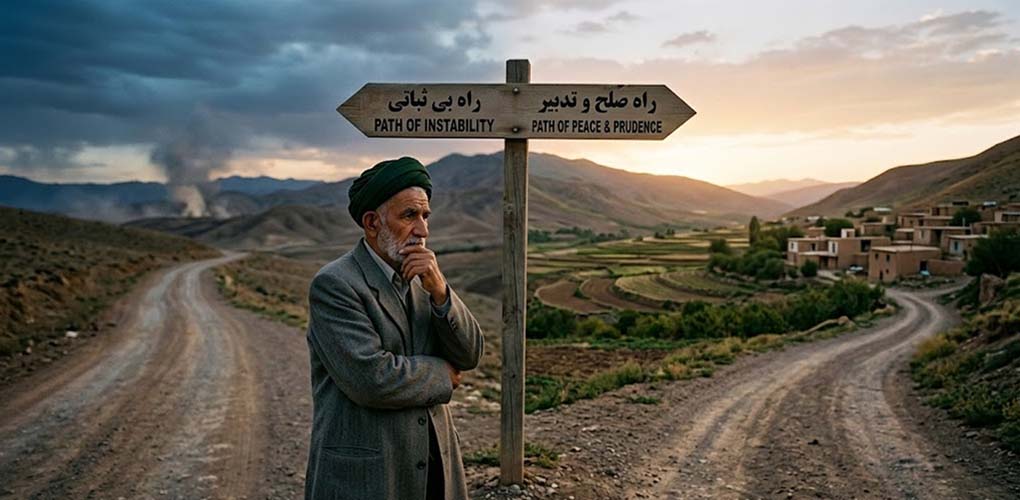
As tensions rise, Iran appears increasingly isolated. There is no visible, unequivocal backing from Europe, nor clear and decisive support from global powers such as China or Russia. Even neighboring countries, once cautious and patient, seem to have reached the limits of their tolerance. Isolation in geopolitics is a dangerous position, especially in times of conflict.
The domestic situation further compounds these challenges. Iran’s economy had already been under severe strain before the present hostilities intensified. Sanctions, inflation, unemployment and public dissatisfaction have taken a heavy toll. The internal unrest that began on 28 December 2025 led to significant casualties and reflected widespread frustration. A nation grappling with economic hardship and social turmoil can ill afford the burden of a prolonged external confrontation.
In such circumstances, wisdom must prevail over rhetoric. Hollow threats and emotional slogans may generate momentary applause, but they do not substitute for strategic strength or sustainable policy. True courage lies not in escalation, but in restraint, not in defiance for its own sake, but in pragmatic engagement. Military capabilities have their limits, particularly when measured against a far stronger adversary. Ignoring this reality could lead to irreversible consequences.
Countries like India, while maintaining traditionally friendly ties with Iran, cannot and should not be expected to support military adventurism against the United States. International relations today are guided by national interest, global stability, and long-term economic considerations not by emotional alignments.
The only viable path forward is an immediate ceasefire, followed by meaningful dialogue. A pragmatic and progressive political approach in Tehran focused on reform, reconciliation and rebuilding diplomatic bridges could open the door to renewed engagement with the global community. Iran possesses immense civilizational depth, human capital and strategic importance. With responsible leadership and constructive diplomacy, it can regain stability and flourish once again.
History shows that wars often end not with triumphant slogans but with painful realizations. It is far better to choose dialogue today than to face defeat tomorrow. The decision must be made now before it is too late.