Najmuddin A Farooqi.
The ongoing visit of Saudi Crown Prince Mohammed bin Salman (MBS) to the United States marks one of the most consequential diplomatic engagements in recent years. Far more than a ceremonial exchange, this visit arrives at a pivotal moment of shifting international alignments, regional uncertainty and far-reaching domestic reforms within the Kingdom. Its significance lies not only in reaffirming the historic Saudi–US partnership but also in redefining its future trajectory.
For critics and detractors who have long attempted to undermine Saudi Arabia’s global standing whether through sectarian narratives, politically motivated propaganda or unfounded conspiracy theories this visit stands as a firm rebuttal. The obscure claims about Saudi Arabia’s regional vulnerability or speculative theories regarding zionist expansionist plan of greater Israel have consistently failed to withstand the realities of diplomacy and geopolitical developments. The strengthening of Saudi–US relations, combined with ongoing efforts toward a sustainable peace in the region, highlights that the Middle East’s future will be shaped by cooperation, not by the pessimism of those who predict perpetual conflict. Indeed, even long standing issues such as the Israeli Palestinian conflict are witnessing renewed diplomatic attention, with growing international momentum toward a viable two state solution in which Israel and Palestine can eventually coexist as peaceful, independent neighbours.
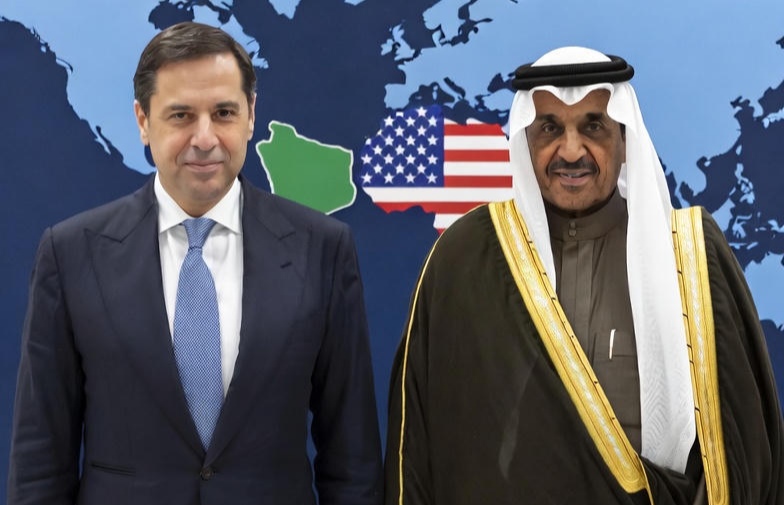
At the heart of MBS’s visit is a shared recognition that Saudi–US relations are expanding well beyond the traditional pillars of oil and security. For Saudi Arabia, the Crown Prince seeks to lay the foundation for a long-term strategic framework that enhances defence cooperation, accelerates technological development and positions the Kingdom as a central player in regional stability. For the United States, this moment presents an opportunity to reinforce its international influence.
The visit is transformative in both scope and ambition. High-level discussions have advanced into strategic sectors that reflect the changing nature of global power, artificial intelligence, cybersecurity, advanced defence technologies and nuclear cooperation. These align directly with the objectives of Vision 2030, Saudi Arabia’s ambitious blueprint for economic diversification and technological modernization. Each potential agreement signals a shift toward a multidimensional partnership grounded in innovation and long-term collaboration.
One of the most significant outcomes is President Trump’s endorsement of the sale of F-35 fifth-generation stealth fighter jets to Saudi Arabia. The aircraft can perform multiple roles, including air combat, ground attack and reconnaissance. This development represents a major milestone in bilateral defence relations. First, it enhances the Kingdom’s deterrence capability in one of the world’s most sensitive geopolitical regions. Second, it elevates Saudi–US military cooperation to a level previously reserved for Washington’s closest strategic partners. Third, it reshapes regional power balances, as except for Israel no other country in the region possesses the F-35, the world’s most advanced fighter jet.
Beyond defence, economic and trade cooperation form another critical pillar of the visit. Saudi Arabia is rapidly emerging as a global investment hub and the United States remains a key partner in large-scale projects across energy, infrastructure, technology and the digital economy. These joint ventures are mutually beneficial Riyadh gains access to advanced American technologies and expertise, while Washington benefits from Saudi capital, economic opportunities and a strengthened energy relationship.
Regionally, the outcomes of this visit reinforce Saudi Arabia’s role as a leading force for and modernization. As the Kingdom continues its strategic transformation, neighbouring states are adapting to the new realities of a more assertive and technologically advanced Saudi Arabia. The renewed Saudi–US alignment adds further momentum to broader regional cooperation.
Ultimately, Crown Prince Mohammed bin Salman’s visit is more than diplomatic protocol it is a watershed moment. It signals the start of a new era in Saudi US relations, defined by strategic depth, economic interdependence and shared global aspirations. The implications of this strengthened partnership will influence regional geopolitics, defence architectures and international alliances for years to come.