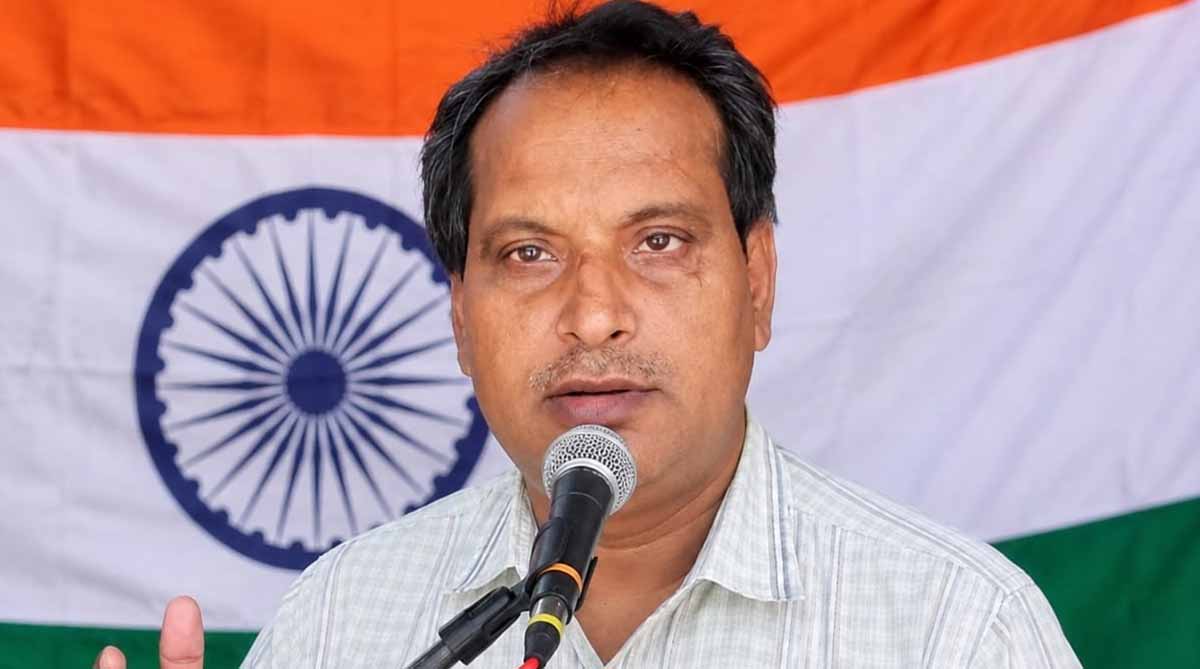

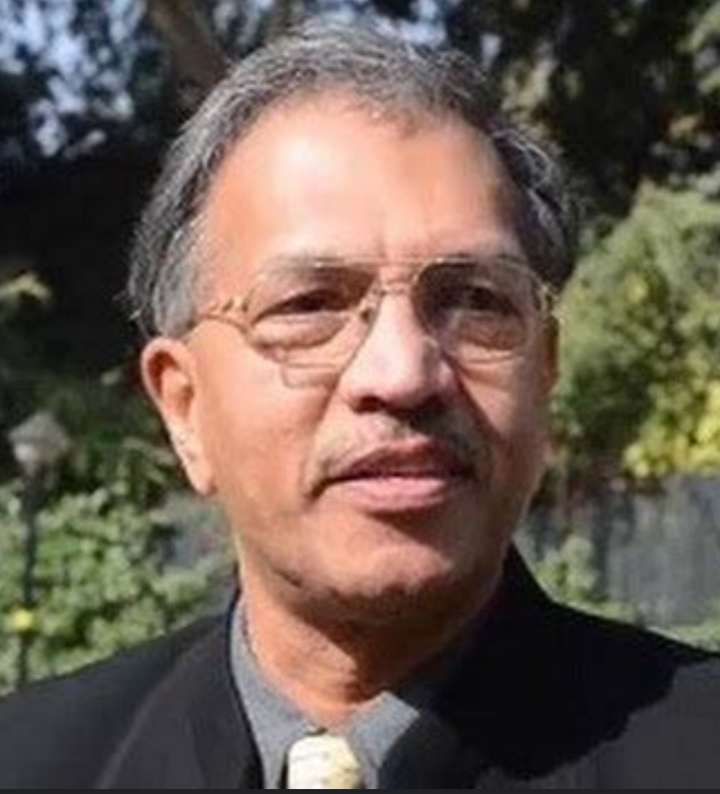
 Dr. A. K. Merchant*
IT is amply evident that despite enormous advances towards material well-being, and phenomenal awareness brought about by the speed of communication, travel and exchange of information, present-day society is in the grip of manifold discontents. One may identify the causes of discontent mainly for two reasons. First, is the pursuit of consumerism, cheap thrills that provide momentary pleasure; secondly, the vast inequalities or exclusivity by sections of the population. Sustainable Development Goals–Agenda 2030 focuses on the inclusiveness and participation of every person with the motto: “Leave No One Behind” which is a reminder of what Mahatma Gandhi said all his life to eradicate discrimination still so rampant not only in our country but throughout the world.
The wholeness and oneness of humankind is the central principle of Bahá’u’lláh, Founder of the Bahá’i Faith: “Of one tree are all ye the fruits, and of one bough the leaves… Let not a man glory in this that he loveth his country, let him rather glory in this that he loveth his kind.”
Today’s survival mode economy with respect to the wider society and greed-based demands by small sections of the population in every country, creates more and more discontent which in turn lead to crimes and violent conflicts. We may talk of good governance and take pride in the democratic system wherein the fight through elections to serve people and solve their problems often becomes empty rhetoric or promises only to be led by market forces promoting consumerism. Despite constitutional and legal recognition, Scheduled Castes or Dalits suffer social and economic discrimination and are prone to caste-based violence. This is also true with respect to gender injustice that is quite widespread throughout the country and elsewhere. Hence, the importance of goal number 5 of Sustainable Development Goals– ”Gender Equality”.
The Writings of the Bahá’i Faith remind us that a civilized person is highly sensitive to others’ suffering and that a civilization may thrive only when it is based on certain fundamental values like compassion, justice, love, service, and wisdom. “Humanity,” Bahá’is urge, “must become imbued with new virtues and powers, new moral standards, new capacities.” Challenge for peoples everywhere regardless of their national, race, class, caste, religious identities, then, “is to examine the present practices in their societies, weigh them in light of the [Bahá’i] Teachings, weed out any undesirable tendencies, and learn to establish new patterns of family life suited to the needs of a new age… Cultivating a new pattern of family life also counters the forces of disintegration that are an inseparable feature of an age in transition.” In such a socio-politico-economic setting “individuals are tempted to surrender to a life of material distractions or personal gratification, thereby becoming mere objects to be manipulated by those who seek to impose their designs on society. Contrasting ideologies and identities, incompatible with the ideals of the oneness of humanity and a peaceful world, vie for the allegiance of the masses and contend for superiority with one another. Some of these movements plant seeds of prejudice and fanaticism which ultimately yield estrangement, conflict, and contention among the peoples of the world.”
Recognizing humanity’s oneness Bahá’is are striving to promote an all-encompassing, transcendent identity inclusive of an infinite range of diverse and intersecting cultural and historical expressions. Because the Age we live in is increasingly one of interconnection and integration, requiring new models of decision-making and management of the nation-state. Unfortunately, current systems and structures are deeply embedded within oppositional conceptions of identity that breed discontent in every strata of present-day society.
Therefore, the focus on the people-centric approach and principles of accountability, transparency and participation, as developed in the capacity building curricula of the Bahá’i Faith helps to overcome categories of “us” and “them” binaries that are the bane and scourge of much of the present-day world. For the Baha’is the transition toward greater degrees of integration is an ongoing process since the forces propelling new forms of interconnections present a challenge that humanity has never faced before: “widening the circle of belonging to transcend any designation of ‘the other’ and to embrace humankind in its entirety, drawing upon its rich diversity as a source of limitless strength.”
Re-conceptualizing human nature is no simple task, but there is no other option if civilization, as we know it, has to survive and advance to the next level. Materialistic theories and systems, and distorted assumptions that human beings are incorrigible and self-centered will need to give way to new economic arrangements that take into consideration issues of sufficiency together with social, environmental, and spiritual dimensions of human existence.
Bahá’is believe that the only way to arrest the spread of discontent throughout the world is for the leaders, both religious and secular, to discard outworn concepts and unworkable assumptions and together with informed members of the society, lay the foundations for a just and harmonious global community and thereby avoid further catastrophes.
*The writer is a social worker, independent researcher, & member of the Baha’i Community of India.