
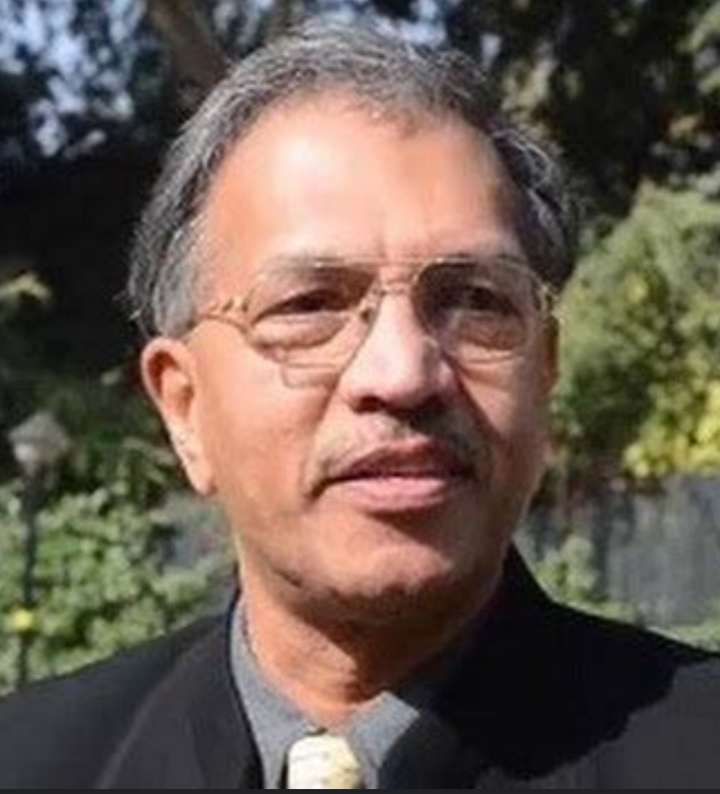
 Dr. A. K. Merchant*
The title of this article is the first book used in Bahá’í Training Institute for study circles of adult members in the society. Those who enroll join a global educational program launched by followers of Bahá’u’lláh, Founder of the Bahá’í Faith. The book’s three units invite readers to examine fundamental questions—Who am I? Why am I here? and What is my role in the Divine Plan?—and to let the answers shape thoughtful, mature action. The study is the first step toward forming a new mindset. Reflective study of the spiritual life reshapes how one understands identity, purpose, and destiny. By valuing the present, cultivating inner capacities, and committing to service and education rooted in spiritual principles, individuals and communities can develop a new mindset—one that meets life’s uncertainties with hope, dignity, and purpose. As the engines of spiritual growth and providing impetus for selfless action these Training Institutes a systematic understanding Bahá’u’lláh’s will and purpose for the individual, the institutions, and the community in some 17,000 identified clusters around the world and the entire human race. Bahá’ís believe that a new culture, vivified by a new state of mind, would give rise to a global framework for accepting the reality of our Age that the earth is but one country and humankind its citizens and for the building a new civilization.
Contemporary life forces a clear choice: to live in fear or in hope. Absolute control is impossible, yet the direction of our lives depends largely on the choices we make. One may imagine the future as a road trip that encounters delays—running out of fuel, a tire getting punctured, or a detour. Despite setbacks, the traveller can still reach the destination, perhaps later than planned. Likewise, life’s surprises are not failures but part of the journey. Bahá’ís are encouraged to value the present hour and to cherish life’s gift rather than squander it in regrets about the past or anxieties about the future. Life is made up of good and bad lessons we accumulate along the way. In order to understand it, we must separate it into a few domains, each with their own lessons to teach us.
The book’s third unit, “Life and Death,” explores the soul—referred to as atman, ruh, or the spiritual identity of a person. Bahá’u’lláh describes the soul as a divine sign and a mystery beyond full human comprehension. The relationship between soul and body is like light reflected in a mirror: the reflection is not the source itself. The soul transcends gender, race, class, and nationality. Human development begins at conception and continues through earthly stages and beyond death into another form of existence. Throughout these phases, the essential reality of the person endures.
Bahá’í writings teach that human life begins with conception; there is no pre-existing human form and therefore no past-life karma. Modern psychology has taught that the capacity of the human mind for believing what it imagines is almost infinite. Because people think they have a certain type of experience, and think they remember something of a previous life, does not mean they actually had the experience, or existed previously. The power of their mind would be quite sufficient to make them firmly believe such a thing had happened. This world is a field for cultivating God-given capacities: praising the Creator, fulfilling the Divine Will as revealed to humanity, and serving society. Forming a new mindset requires recognizing the dynamics of growth—both personal and collective. Like a child who falls while learning to walk, apparent failures are stepping toward maturity. Bahá’u’lláh counsels gentle speech and nurturing guidance so that humanity may attain true understanding and nobility.
While Bahá’ís emphasize living in the present and serving the world, they also study history and regularly review their activities through study, consultation, action, and reflection. This practice prevents being paralyzed by past regrets or future fears. Mortality reminds them that life is too brief for frustration over unmet goals. The Bahá’í framework of service—encompassing individuals, communities, and institutions—offers a coherent vision of how the Divine Will unfolds. Bahá’ís avoid circular debates and fruitless pursuits; spreading the Teachings is not a marketing exercise but a committed, spiritual endeavour. Daily prayers and engagement with sacred texts reinforce gratitude for the opportunity to live and serve.
Education is central to community advancement and to empowering new generations. The Bahá’í ideal of education emphasizes spiritual awakening rather than mere material advancement, ideological conformity, or political agendas. Bahá’u’lláh calls humanity a “mine rich in gems,” and education is the means to reveal those treasures. What is needed is an education of the soul—one that fosters intellectual and spiritual growth while enabling service to the community. This twofold moral purpose aims at material, spiritual, and social transformation. Focusing on the life of the spirit frees believers from the fear of death; they view death as the soul’s return to its Source as a continuation of the soul’s spiritual journey filled with hope. Bahá’í Writings offer profound insights and explain that one cannot picture in this life the entirety of one’s state in the next world. What is certain is that one’s consciousness, and one’s personality, endures in a new state, and that the world Beyond is better than this one as this one is better than the mother’s womb. The soul is able to commune with other souls on the spiritual plane. The best way to remember souls who have ascended to the next world is through prayers and recalling their good deeds when they lived on earth. “Thus, one may pray for a departed soul to advance, to be forgiven, or to be made the recipient of divine favours…”
—————————————————————————-
*The writer is a social worker, independent researcher, & member of the Bahá’i Community of India. Views expressed are personal. Contact : akmerchant@hotmail.com