
 Najmuddin A Farooqi.
The question of whether God is a destroyer or a saviour has occupied human thought for centuries. Yet, before attempting to answer it, one must first confront a more immediate and observable reality, human behavior itself.
From a practical standpoint, the existence of the universe and the human race is often explained through the theory of evolution. If we accept this framework, it suggests that human beings have inherited certain instincts from the animal world-instincts that include aggression, survival and competition. At the same time, an overwhelming majority of humanity continues to believe in the existence of God.
Across the Abrahamic traditions Judaism, Christianity and Islam, which together account for more than two-thirds of the world’s population there exists a shared narrative about the first act of violence, the killing of one brother by another, driven by jealousy. Similarly, in Hindu tradition, the epic Mahabharata presents Lord Krishna, revered as divine, guiding the course of a great war. For agnostics, atheists and non-believers many of whom align with evolutionary thought the same underlying question persists, why does the human instinct for conflict endure ?
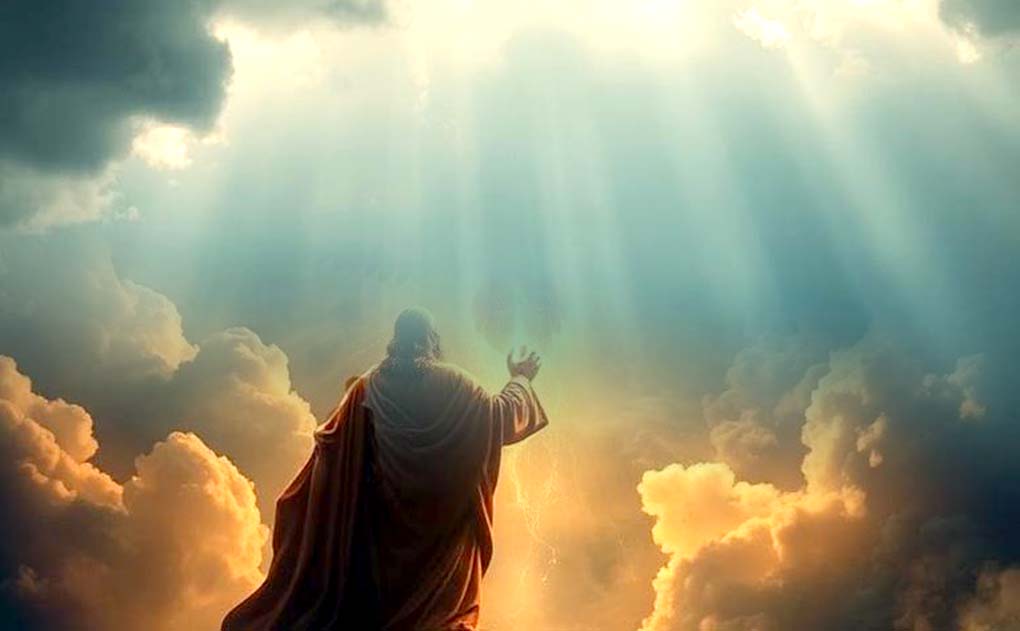
At this point, it may be wise to set aside debates about the existence or nature of God, so as not to reduce the divine to human limitations. Instead, we can reflect on how humanity has responded to moral guidance across time.
According to Abrahamic belief, God sent numerous messengers prophets throughout history, each bearing guidance for humanity. Yet, these very figures, despite their moral authority, often faced hostility, rejection and violence from their own communities. If even the messengers of peace were subjected to such suffering, it is not difficult to imagine the extent of conflict among ordinary people.
History offers striking examples. Jesus Christ, remembered as an embodiment of compassion and peace, endured profound violence. Centuries later, Prophet Muhammad faced sustained persecution, insult and hardship in a tribal society marked by constant conflict. In more recent times, Mahatma Gandhi, who dedicated his life to non-violence and empathy, was ultimately assassinated.
These examples span eras and traditions, yet they reveal a consistent truth, no period of human history prehistoric, ancient, medieval, or modern has been free from violence. The only difference lies in scale. In earlier times, wars were fought face-to-face, limiting the extent of destruction. With technological advancement, however, the capacity for harm has expanded dramatically, culminating in catastrophic events such as the atomic bombings during the Second World War.
Ironically, as human civilization has progressed, so too have our tools for healing. Nations, cultures and institutions have evolved alongside advances in science, education and technology. Modern knowledge systems do not teach hatred, destruction rather they emphasize understanding compassion and the preservation of life. The field of medicine, in particular, stands as a testament to humanity’s ability to heal repairing injuries, treating diseases and upholding human dignity.
This raises a fundamental question, if neither religion nor modern education advocates violence why does it persist so widely?
Violence whether in the form of war, conflict or individual acts remains one of the darkest aspects of human existence. Soldiers, often acting under orders and a sense of duty and civilians alike become its victims. Importantly, no major religious tradition endorses the unjust taking of life rather such acts are widely regarded as grave moral transgressions. Even traditions that have witnessed warfare often emphasize non-violence as an ideal.
And yet, violence continues. Wars are fought, lives are lost and history repeats its cycles of destruction. If we look back over the past century alone, it is likely that more human lives have been lost to violence inflicted by fellow humans than have been saved through acts of compassion and care.
This reality forces us to reflect on the purpose of our institutions legislatures, judiciaries, electoral systems, hospitals and educational frameworks. Why do these structures exist if not to uphold justice, dignity and the well-being of humanity ?
At an individual level the question becomes more pressing why don’t we feel greater fulfilment in healing rather than harming ? Why do we not lose sleep over causing pain, as easily as we justify it ? For those who believe in God, it is worth asking whether any divine presence could approve of acts rooted in hatred or aggression. And even for those who do not, a simple moral reflection suffices how would we feel if the harm we inflict were inflicted upon us ?
Ultimately, the path forward lies beyond divisions beyond religion, ideology and national boundaries. True progress cannot be achieved in isolation. A nation’s prosperity is inseparable from peace of its neighbors and global advancement is impossible without global harmony.
If humanity is to move forward meaningfully, it must choose consciously and collectively between its inherited instincts for destruction and its cultivated capacity for compassion. The answer to whether God is a destroyer or a saviour may in the end depend less on theology and more on the choices we make as human beings.