 Dr. A. K. Merchant*
This year in March Christian Lent, Muslim Ramadan unfolded together: 4.5 billion Christians and Muslims (> 50% of the world population) observe these traditions of charity, prayer, fasting, reflection that culminates in Easter and Eid’ul Fitr. Around the same time the festival of Ugadi and Gudi Padwa would be celebrated on the first day of the Hindu lunisolar calendar in the month of Chaitra followed by Ramanavami. Yet another festival namely Naw-Ruz (Nowrooz), Persian New Year that comes in the 3rd week of March is celebrated on spring equinox in countries of Central Asia and parts of the Middle East. Although Naw-Ruz is partly rooted in the religious tradition of Parsi-Zoroastrians yet for the followers of the Bahá’í Faith, it has special significance as the first day of the Bahá’i calendar that commenced in 1844. It represents “the Day of God,” when a re-awakening of the spirit occurs and the light of a new Revelation shines equally upon the entirety of God’s creation. Bahá’u’lláh wrote in His Book of Laws: “…O people of the world! We have enjoined upon you fasting during a brief period, and at its close have designated Naw-Rúz as a feast… Say: This day, verily, is the crown of all the months and the source thereof, the day on which the breath of life is wafted over all created things. Great is the blessedness of him who greeteth it with radiance and joy.”
In 2009 Naw-Rúz was inscribed in the list of UNESCO Intangible Cultural Heritage of Humanity for it “promotes values of peace and solidarity between generations and within families as well as reconciliation and neighbourliness.” In a sense, every holy day or festive occasion, as per the numerous calendars that are in vogue, is really a reminder to every human being to manifest the best in oneself and live in peace with all. According to an article published by the National Geographic titled “The Holy Days” in any given year there are 138 sacred days, comprising feasts, fasts, and prayers. An interesting feature of these holy days is that there are ‘new years’ all year round! Although 1st January of the Gregorian calendar has become the de facto global New Year date, yet many religious communities and faith-based traditions follow other calendar systems and celebrate New Year during different months.
The grave turmoil that has engulfed our planet brings to mind the following words of Bahá’u’lláh: “These are not days of prosperity and triumph. The whole of mankind is in the grip of manifold ills. Strive, therefore, to save its life through the wholesome medicine which the almighty hand of the unerring Physician hath prepared.” Through the new calendar, He ordained, the sacred moments globally acknowledged and commemorated would further strengthen humanity’s understanding of its common destiny in the context of time and space and thereby recast the rhythm of life ushering in the promised Era of peace and prosperity, the Aquarian Age, described in the Sacred Scriptures as the Ram Rajya or the Kingdom of God on earth. Artificial Intelligence and related new technologies are radically impacting every facet of life on earth and by the end of 2026, AI will bring about many great outcomes for humanity and many not-so-great destructive outcomes. One thing is clear: so long as humanity rejects the vital principles of interdependence and oneness, the widespread sufferings would multiply and become more acute.
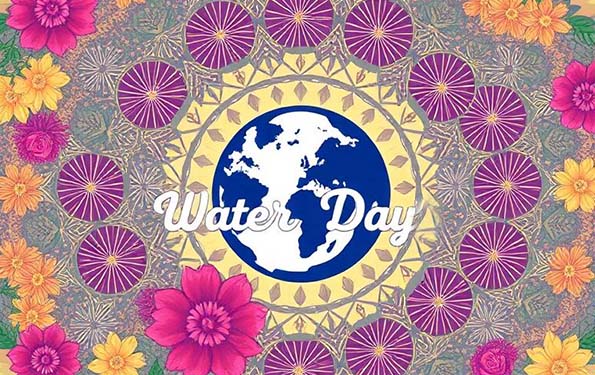
Equally important is 22nd March which is the United Nations World Water Day. The theme this year is water’s role in gender equality, a reminder of Sustainable Goal number 6. Since 1993, all member countries have created awareness on how to take appropriate action to tackle the water and sanitation crisis in different regions of the planet. As per the latest data, some 2.2 billion people are living without access to safe water. India is 40% stressed for clean potable water. In fact, in every religion a devotee is obligated to protect the sacred gift of water and utilize this scarce resource judiciously. Without water there would be no life. The current war in West Asia has not only highlighted the issues relating the crude oil supply disruption but also the destruction of water sources due to the attacks on desalination plants.
Living under the spectre of mass extinction, except for the human beings no other species, perhaps has the awareness of the perils engulfing our fragile planet, they simply disappear. Let everyone one who is awake to the condition of our planet, and to the persistent evils that warp the lives of its inhabitants, address essential questions about who we are, what is our purpose on earth and why it is so crucial to give up old and outmoded attitudes and habits of thinking and acting that have been the cause of so much needless suffering, conflicts and devastation. Therefore, let these festive days—Ugadi, Naw-Rúz, Eid’ul Fitr, Ramanavami, Easter, inter alia–impact global consciousness for the speedy resolution of the intractable crises to fulfil the longing for peace and unity in the hearts of countless millions.
__________________
*The writer is a social worker, independent researcher & member of the Bahá’i Community of India.