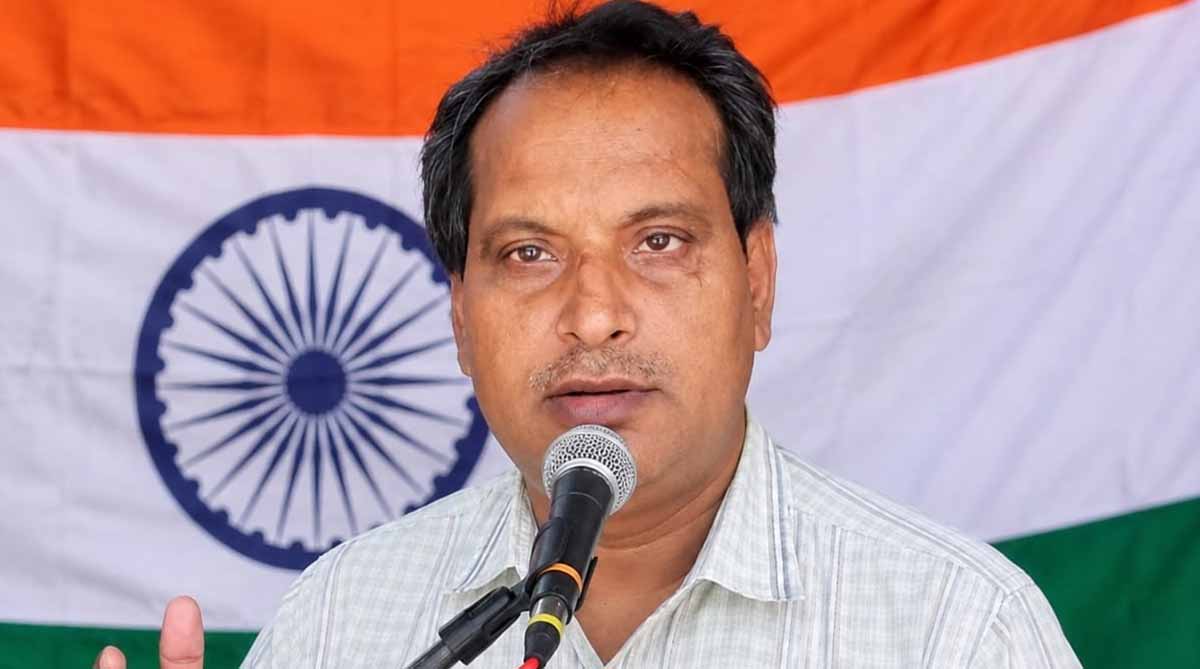
 By Najmuddin A Farooqi. (A Retired Government Servant)
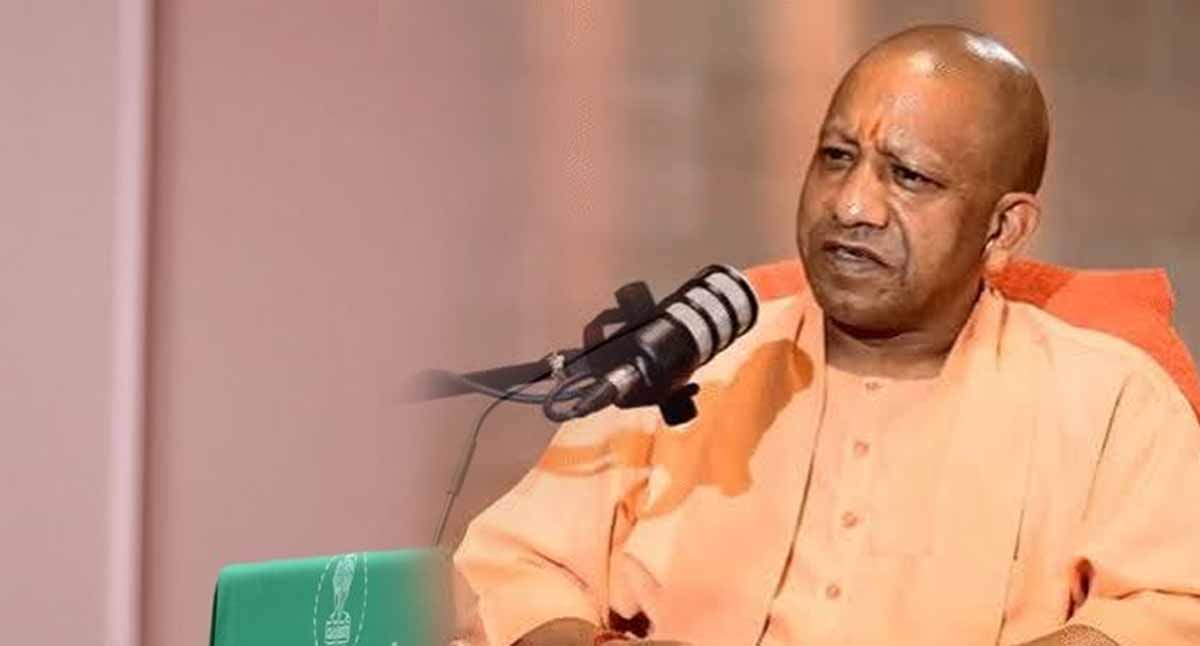
Honourable Chief Minister Shri Yogi Adityanath Ji,
I write this not as a member of any political party, nor as an activist pursuing any ideological agenda. I am a retired government servant, sixty-nine years of age, in indifferent health and with no political affiliations whatsoever. My only concern is the future of social harmony and constitutional citizenship in our country, particularly in the state of Uttar Pradesh.
Throughout my life, I have lived and worked among people belonging to different communities. I have spent years in predominantly Hindu neighbourhoods, including some of the most affluent localities. My personal experience has consistently been that the overwhelming majority of Hindus are decent, tolerant and peace-loving people. Their generosity and civility are not recent developments; they have been hallmarks of Indian society for generations.
For centuries, Hindus and Muslims have lived together across urban and rural India. There have undoubtedly been disagreements, social tensions and periods of conflict. There have also been riots at various points in history. Yet it would be unjust to attribute such violence to ordinary, law-abiding Hindus or Muslims. Most cultured and responsible citizens from either community have never participated in communal violence. The more significant question has often been the role played by those entrusted with governance, law enforcement and public leadership.
Today, however, many Muslims in Uttar Pradesh perceive a growing sense of unease. This feeling does not arise merely from isolated incidents but from the cumulative effect of public rhetoric. As the Chief Minister of India’s most populous state, your words carry immense weight. Public statements, political speeches and even non-verbal expressions from those in high office send powerful signals to society.
Many Muslims feel that references repeatedly linking their community with terms such as “mafia,” “qabristan,” or historical figures like Babur and Aurangzeb create an atmosphere in which contemporary Indian Muslims are continually associated with historical wrongs or criminality. Whether intended or not, such messaging contributes to a perception that an entire community is viewed through the prism of suspicion.
Particularly troubling are occasions when respected public figures are subjected to harsh or derogatory language. Senior personalities such as Maulana Arshad Madani and former Vice President of India Shri Hamid Ansari deserve disagreement if their views are contested, but democratic discourse should remain dignified. Public debate is strengthened by reasoned argument, not by ridicule or demeaning comparisons.
I fully respect the sentiments of the followers of Sanatan Dharma, who revere the cow as Gau Mata. However, may I respectfully ask: in the veterinary science curriculum taught at Indian universities, there are no separate chapters that refer to the cow as Mata. As is standard in veterinary science, cows are studied under the scientific categories of “cattle” or “bovine animals.”
Would it therefore be appropriate to describe the authors of these textbooks, or the professors and teachers who teach these subjects, as pashu merely because they use scientific terminology ?
India’s constitutional framework guarantees equal citizenship to all. Political disagreements are natural in a democracy, but religious identity should never become a tool for political mobilization. The long-term strength of a nation depends not on the fears of minorities or the anxieties of majorities, but on the confidence that every citizen enjoys equal dignity before the law.
The experience of Indians living abroad offers an interesting perspective in this regard.
Millions of Indians reside and work in countries where Muslims constitute the majority population. The Gulf Cooperation Council countries Saudi Arabia, the UAE, Qatar, Kuwait, Bahrain, and Oman host one of the largest concentrations of Indian expatriates anywhere in the world. These expatriate communities include Hindus, Muslims, Christians, Sikhs and others.
The Indian diaspora in the Gulf is estimated to number between 8.5 and 10 million people. Hindus constitute a substantial proportion of this population. In countries such as the UAE, Qatar, Bahrain and Oman, Hindu temples exist and Hindu festivals are celebrated with varying degrees of official accommodation and public visibility.
Similarly, in countries such as Malaysia and Indonesia, substantial Hindu communities live and practice their faith openly. Malaysia itself has a sizeable population of Hindu citizens whose presence predates modern migration patterns.
This raises an important question. Do these millions of Hindus living in Muslim-majority countries live in a constant state of fear because they are religious minorities? Do those governments routinely invoke anti-Hindu narratives for political gain? Or do they generally strive to reassure minority communities and integrate them into the national fabric ?
No society is perfect and every country faces challenges. Yet one lesson remains universal: stability is strengthened when governments actively reduce fear rather than amplify it.
I am reminded of an episode from 1993 in the UAE, when a small group reportedly attempted to organize a demonstration in response to the demolition of the Babri Masjid. The authorities acted swiftly, preventing the demonstration and deporting those involved. This occurred at a time when the BJP was not in power at the Centre. The episode illustrated a principle often followed by Gulf governments: political agitation based on imported communal disputes is strictly prohibited irrespective of the identities involved.
Another point worth considering relates to the economic contribution of Indians abroad. I recall reading years ago about the remarkable wealth generated by Indian entrepreneurs in the Gulf, including several major business groups owned by Hindus. Their success demonstrates that Indian communities can thrive in environments where they are numerical minorities, provided they enjoy security, opportunity and respect.
India should aspire to offer the same sense of security and belonging to all its citizens.
It was therefore disappointing to watch you on a news channel in which, while discussing allegations related to a charitable trust associated with the Ram Janmabhoomi movement, political criticism appeared intertwined with references to religious identities and familiar communal tropes. Opposition parties should be challenged on their policies, governance records and political conduct. Democracy is healthiest when political debates remain political rather than religious.
The greatness of India lies not in the dominance of one community over another but in the confidence that every citizen can participate equally in national life. The Constitution does not recognize first-class and second-class citizens. It recognizes only citizens.
My humble appeal to both the Government of Uttar Pradesh and the Government of India is to revisit any approach that may be perceived as favouring one religious community over another. Electoral victories are temporary; social harmony is enduring. Political gains achieved through polarization may last a few years, but the consequences of mistrust can linger for generations.
India’s future will be secured not by deepening divisions but by strengthening the constitutional promise of equal citizenship, mutual respect and justice for all.
That promise remains the foundation of our Republic and the hope of every Indian, regardless of faith.