 Najmuddin A. Farooqi.
Among the great centres of learning that have shaped the intellectual and cultural history of the Indian subcontinent, Farangi Mahal of Lucknow occupies a place of singular distinction. For more than three centuries, its scholars have influenced religious thought, educational development, social reform and national life, leaving behind a legacy that continues to inspire scholars and citizens alike.
The origins of this illustrious tradition can be traced back to Mulla Qutbuddin Sehalvi whose scholarship and piety laid the foundations of a remarkable intellectual lineage. His son, the renowned Allama Mulla Nizamuddin Farangi Mahli, transformed that legacy into one of the most influential educational movements in the Muslim world through the formulation of the celebrated Dars-e-Nizami curriculum.
Designed to provide a balanced education in religious sciences, logic, philosophy, language and rational disciplines, Dars-e-Nizami became the standard curriculum of Islamic seminaries across vast regions of the world. More than three hundred years after its inception, it continues to be taught, in various forms, in thousands of institutions across South Asia, the Middle East, Africa, Europe and beyond. Few educational systems in history can claim such longevity and influence.
The Farangi Mahal tradition subsequently produced a succession of distinguished scholars whose contributions enriched Islamic learning. Among them was Allama Abdul Ali Bahrul Uloom, whose mastery of jurisprudence and profound intellectual insight earned him recognition throughout the scholarly world. His works continue to guide students and researchers seeking a deeper understanding of Islamic law and thought.
Another luminary was Allama Abdul Hai Farangi Mahli, one of the foremost scholars of hadith, jurisprudence and Islamic history of his age. His writings achieved international recognition and remain valuable sources of reference for scholars. Through his research and literary contributions, he enhanced the reputation of Indian Islamic scholarship far beyond the country’s borders.
Yet the greatness of Farangi Mahal lies not merely in its academic achievements. Its scholars also played a notable role in public life and in the shaping of modern India. They demonstrated that scholarship carries responsibilities not only toward learning but also toward society, justice and national welfare.
No figure better exemplifies this spirit than Allama Maulana Abdul Bari Farangi Mahli. A distinguished scholar, reformer and nationalist, he emerged as one of the most influential Muslim leaders of the early twentieth century. Deeply committed to India’s freedom and to harmonious relations among its diverse communities, he worked tirelessly to promote Hindu-Muslim unity during a crucial period in the nation’s history.
Maulana Abdul Bari enjoyed the respect of leaders across political and religious lines and maintained a close association with Mahatma Gandhi. Whenever Gandhi Ji visited Lucknow, important consultations and meetings were often held at Farangi Mahal, which became a centre of intellectual exchange, political dialogue and efforts to strengthen the bonds of national unity. His contribution stands as a powerful reminder that the struggle for India’s independence was enriched by the participation of scholars who viewed patriotism and faith as complementary rather than contradictory ideals.
Indeed, any comprehensive account of India’s freedom movement would be incomplete without acknowledging the role played by Maulana Abdul Bari and the wider Farangi Mahli tradition. Their commitment to national service, communal harmony and moral leadership forms an important chapter in the history of modern India.
In more recent times, this noble legacy found a worthy custodian in Maulana Ahmad Mian Farangi Mahli, former Imam of Eidgah Lucknow. Revered for his scholarship, moderation and dedication to public welfare, he devoted his life to religious guidance, educational advancement and social reform. Through his efforts, he preserved and strengthened the values that had distinguished Farangi Mahal for generations.
Today, that mission continues through the efforts of his sons, Maulana Tariq Rasheed Farangi Mahli and Maulana Khalid Rasheed Farangi Mahli. By preserving, republishing and disseminating the valuable works of their ancestors, they are ensuring that the intellectual treasures of Farangi Mahal remain available to future generations of scholars and students. Their work reflects a continuing commitment to the ideals of learning, service and reform that have defined the institution for centuries.
Farangi Mahal is therefore not merely a historical institution, it is a living tradition. From the educational genius of Mulla Nizamuddin and the scholarly achievements of Bahrul Uloom and Abdul Hai, to the nationalist leadership of Abdul Bari and the guidance of Ahmad Mian, its legacy embodies the harmonious integration of knowledge, faith, public service and national commitment. In an age often marked by division and discord, the example of Farangi Mahal remains a powerful reminder that scholarship can illuminate minds, unite communities and contribute meaningfully to the progress of society.
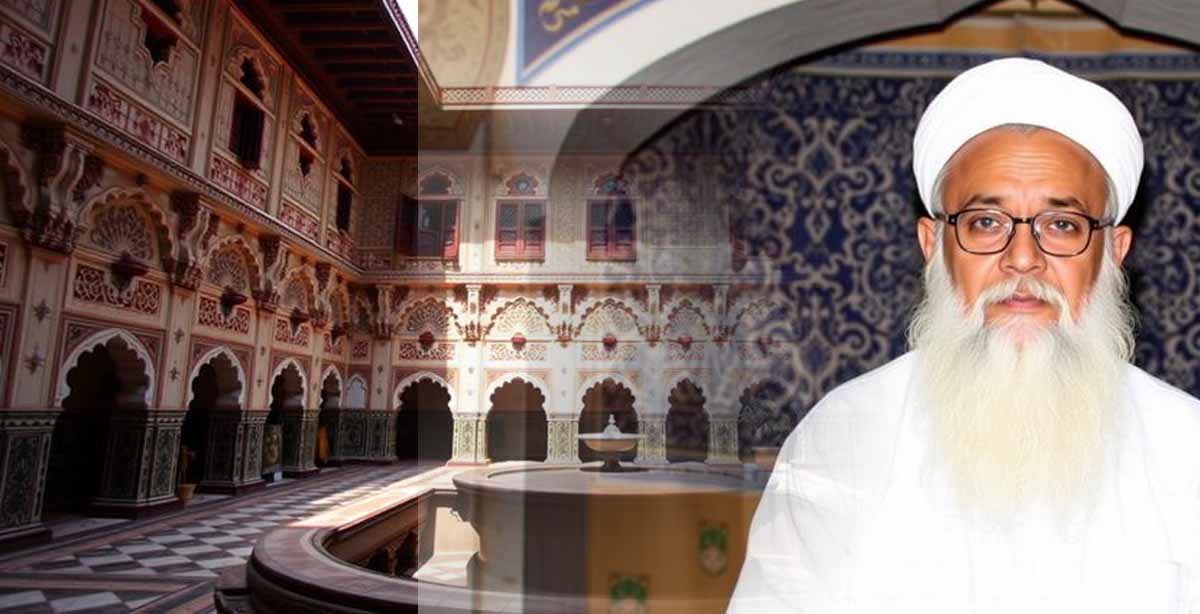
The present Imam of Eidgah, Maulana Khalid Rasheed Farangi Mahli, Chairman of the Islamic Centre of India, is widely regarded as a symbol of compassion, benevolence and dedicated public service. His commitment to charity and humanitarian work is exemplary. Organising free medical and health camps, along with numerous welfare initiatives addressing diverse social needs, has become a regular feature of his service to society.
A tireless worker, he begins his day early and remains engaged in community service until late at night. Whether responding to natural calamities or humanitarian crises, he is invariably among the first to extend relief and assistance. In addition to his religious responsibilities, he regularly organises educational, literary and social seminars, fostering awareness and communal harmony.
He also maintains close coordination with the district administration on sensitive civic matters, particularly during major religious festivals and is personally involved in overseeing arrangements and security whenever required. His unwavering commitment to public welfare has earned him widespread respect across communities.