
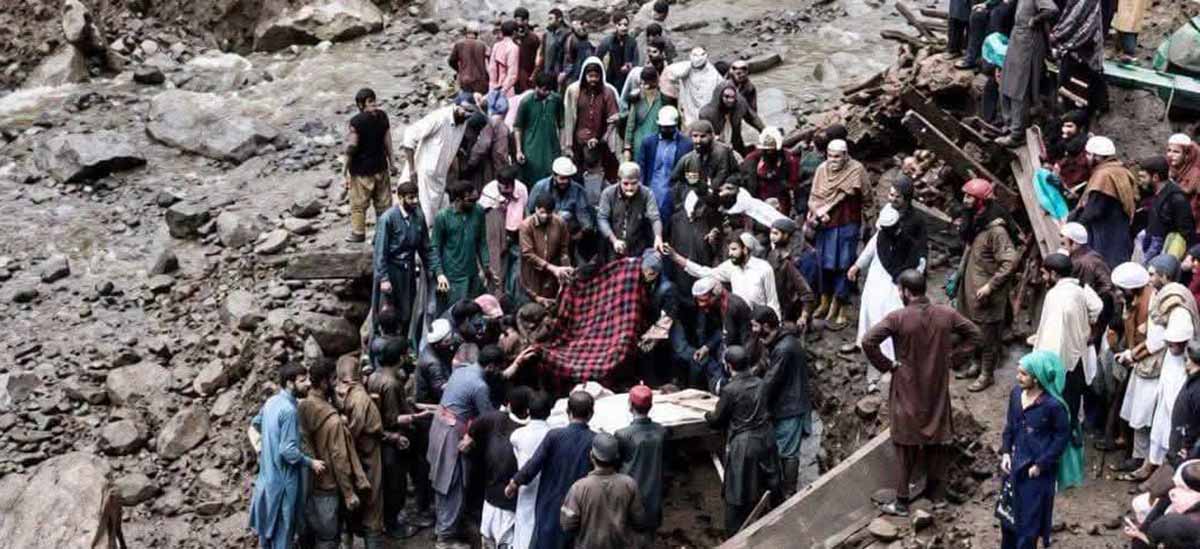
Jammu and Kashmir: “The Earth does not belong to us; we belong to the Earth.” These timeless words have never felt more relevant than they do today as Jammu and Kashmir continues to face an alarming series of weather-related disasters. Once celebrated for its pristine mountains, dense forests, sparkling rivers, and breathtaking valleys, the Union Territory is now witnessing an increasing frequency of cloudbursts, flash floods, and landslides that are claiming lives, destroying livelihoods, and leaving lasting scars on its fragile Himalayan landscape.
According to official data, Jammu and Kashmir has witnessed more than 35 cloudburst incidents this year, resulting in the death of around 31 people and causing widespread destruction to residential houses, roads, bridges, agricultural land, and other public infrastructure. At least 22 cloudbursts were reported between June and the middle of July. However, persistent heavy rainfall during the latter half of July and the beginning of August triggered several more cloudbursts, pushing the total beyond 35. The Jammu division has recorded the highest number of casualties, with districts such as Poonch, Rajouri, Kathua, Doda, and Kishtwar among the worst affected. In the Kashmir Valley, Shopian and Kupwara have also experienced repeated cloudbursts and flash floods, disrupting normal life and damaging critical infrastructure.
While rescue teams and disaster management authorities continue relief and restoration work, these recurring tragedies raise an important question: Are these disasters entirely natural, or are human actions making them more devastating?
Cloudbursts are intense spells of rainfall over a very small geographical area within a short period. In mountainous regions like the Himalayas, such events can rapidly trigger flash floods and landslides because steep slopes allow rainwater to flow downhill with tremendous force. Scientists have increasingly linked the rising intensity of such rainfall events to climate change. As global temperatures rise, the atmosphere can hold more moisture, leading to heavier rainfall when weather conditions are favourable. Although climate change does not “cause” every cloudburst, it can increase the likelihood and intensity of extreme precipitation.
However, climate change is only one part of the problem.
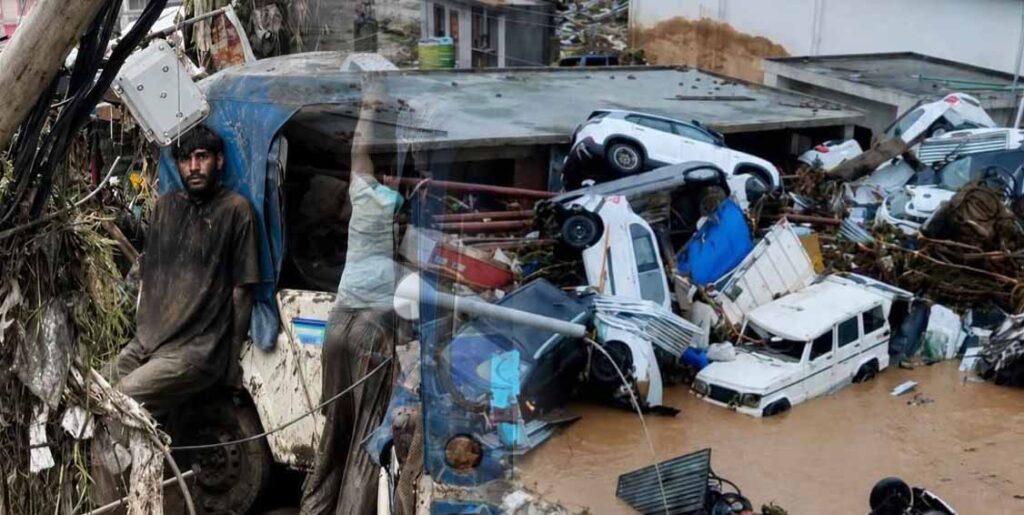
The Himalayas are among the youngest and most fragile mountain ranges in the world. Their ecological balance has been under immense pressure from years of unplanned development, indiscriminate construction, hill cutting, and encroachment on natural drainage channels. Rapid urbanisation in vulnerable areas has often taken place without sufficient regard for geological stability or environmental sustainability.
One of the most serious concerns is the continued degradation of forests. Trees play a vital role in stabilising mountain slopes, conserving soil, regulating water flow, and reducing surface runoff. When forests are degraded or cleared illegally, the land becomes more vulnerable to erosion and landslides. Rainwater, instead of being absorbed into the soil, rushes down barren slopes with destructive force, carrying rocks, mud, and debris that intensify the impact of floods.
Similarly, construction along riverbanks and floodplains has reduced the natural space available for rivers and streams to carry excess water during heavy rainfall. Illegal encroachments, blocked drainage channels, and the careless dumping of solid waste and plastic into water bodies further worsen flooding by obstructing the natural flow of water.
Pollution also contributes indirectly to the growing crisis. The continued emission of greenhouse gases worldwide is warming the planet, altering weather patterns, and increasing the frequency of extreme weather events. Locally, air, water, and land pollution weaken ecosystems that would otherwise help buffer the impacts of intense rainfall. Environmental degradation and climate change are now closely intertwined, making mountain communities increasingly vulnerable.

The consequences extend far beyond the immediate loss of life and property. Every cloudburst leaves behind shattered homes, damaged schools, destroyed roads, broken bridges, disrupted healthcare services, and ruined agricultural fields. Farmers lose crops that sustain their families, children struggle to reach schools, businesses remain cut off from markets, and remote villages face prolonged isolation. The emotional trauma experienced by families who lose loved ones or their homes can last for years.
The economic cost is equally significant. Every destroyed bridge, washed-away road, and damaged public building requires enormous financial resources for reconstruction. Instead of investing in long-term development, governments are repeatedly compelled to divert resources towards emergency relief and rehabilitation. Preventing disasters through environmental conservation and resilient infrastructure is far less expensive than rebuilding after every calamity.
The time has come to rethink development in ecologically sensitive regions. Development is essential, but it must be sustainable and scientifically planned. Environmental Impact Assessments should be rigorous and transparent. Illegal deforestation must be curbed through strict enforcement of environmental laws. Afforestation and watershed restoration should become long-term priorities rather than occasional campaigns. Construction in high-risk zones should be regulated, and natural drainage systems must be protected from encroachment.
Communities also have an important role to play. Protecting forests, avoiding the dumping of waste into rivers and streams, participating in plantation drives, and respecting weather advisories can collectively reduce disaster risks. Schools and colleges should strengthen environmental education so that future generations understand the importance of conserving the fragile Himalayan ecosystem.
Technology must also become an integral part of disaster preparedness. Advanced weather forecasting, real-time monitoring of rainfall, community-based early warning systems, resilient infrastructure, and improved emergency response mechanisms can save countless lives. Local communities should be trained in disaster preparedness, evacuation procedures, and first aid so that they can respond quickly during emergencies.
Jammu and Kashmir’s breathtaking natural beauty has always been its greatest strength. Yet that beauty depends upon the health of its forests, rivers, mountains, and ecosystems. Every tree cut illegally, every stream polluted, and every hill slope disturbed weakens nature’s ability to protect us. The increasing frequency of cloudbursts serves as a reminder that environmental conservation is not a luxury, it is a necessity for human survival.
Nature has spoken repeatedly through floods, landslides, and cloudbursts. These are not merely isolated weather events but warning signs that demand urgent attention. If we continue to ignore the delicate balance of our environment, such disasters may become even more frequent and destructive. But if governments, communities, scientists, and citizens work together to protect our natural heritage, we can reduce risks and build a safer, more resilient future.
The mountains of Jammu and Kashmir have protected generations for centuries. It is now our responsibility to protect them. The choices we make today will determine whether future generations inherit thriving valleys and healthy forests or a landscape increasingly defined by disaster.
By Mansoor Qadir.