Call for an end to intimidation of activists Bhanu Tatak, Ebo Mili, SIFF and the Siang People’s Movement
20th September, 2026: National Alliance of People’s Movements (NAPM), National Alliance for Climate and Ecological Justice (NACEJ) and All-India Rivers’ Forum (AIRF) express our strong solidarity with the people of Arunachal Pradesh, who are resisting the forcible imposition of multiple mega-dam projects on their ancestral lands, rivers and forests. Our solidarity also extends to the Siang Indigenous Farmers’ Forum (SIFF) and environmental lawyers and activists Bhanu Tatak and Ebo Mili, who have stood firmly with affected communities in their struggles to save their lands, forests and cultures.
We see the recent case registered by CBI against Ms. Bhanu Tatak, as part of the series of repressive measures by the Government over years, to quell the democratic resistance by the indigenous communities and farmers. The FIR by CBI against Bhanu, which alleges violations of the Foreign Contribution (Regulation) Act, 2010 (FCRA), is a means of intimidating, discrediting and weakening a peaceful people’s movement. We salute the Siang Indigenous Farmers Forum Youth Wing (SIFFYW) that has resolutely stood with Bhanu, in the face of intimidation and divisive tactics of the Government, calling her true daughter of the Abor land.
Instead of dialoguing with the local communities and wider Siang people’s movement, it is unjustifiable that an FCRA investigation has been instituted as an instrument of intimidation against Ms. Bhanu Tatak, a young woman indigenous leader. The timing and circumstances of this FIR are particularly troubling because they come amidst intensified efforts to advance surveys and pre-feasibility activities for the Siang Upper Multipurpose Project (SUMP), in the backdrop of sustained opposition from affected communities.
A democratic people’s movement cannot be treated as a ‘security problem’ by the Govt. Unfortunately, FCRA is being increasingly weaponized to intimidate people’s organizations and harass their leaders. It is in fact the free flow of foreign funding for toxic infrastructure projects enabled by the Government (for ex. the disastrous SHANTI Act to privatize nuclear power generation) that poses a major risk to the people and environment in India. It is such decisions of the Government that need to be strongly questioned.
It is also a fact that a retrospective amendment to the FCRA Act, 2010 through the Finance Bill, 2016, validated the foreign funds received by political parties after 26th September, 2010. In order to avoid scrutiny before this date, the Government introduced another amendment in the Finance Act, 2018 to cover the period beginning 5th August, 1976 – the date the original FCRA law came into existence. These amendments were done to counter a landmark judgement of the Delhi High Court in 2014, in a case filed by EAS Sarma and Association for Democratic Reforms. The judgement found that the BJP and INC had taken donations from Vedanta & its subsidiaries, registered in England and Wales.
The central question that people’s movements are asking today is: When a political party illegally takes foreign funds from corporates, is found guilty, amends the law to legalize its actions, and then weaponizes the FCRA to intimidate people’s movements, which are legitimately and democratically protesting the terrible environmental and social cost of ill-conceived projects, which only benefit corporates in the name of ‘development’, who is actually guilty of taking foreign funds to harm the interests of the country?
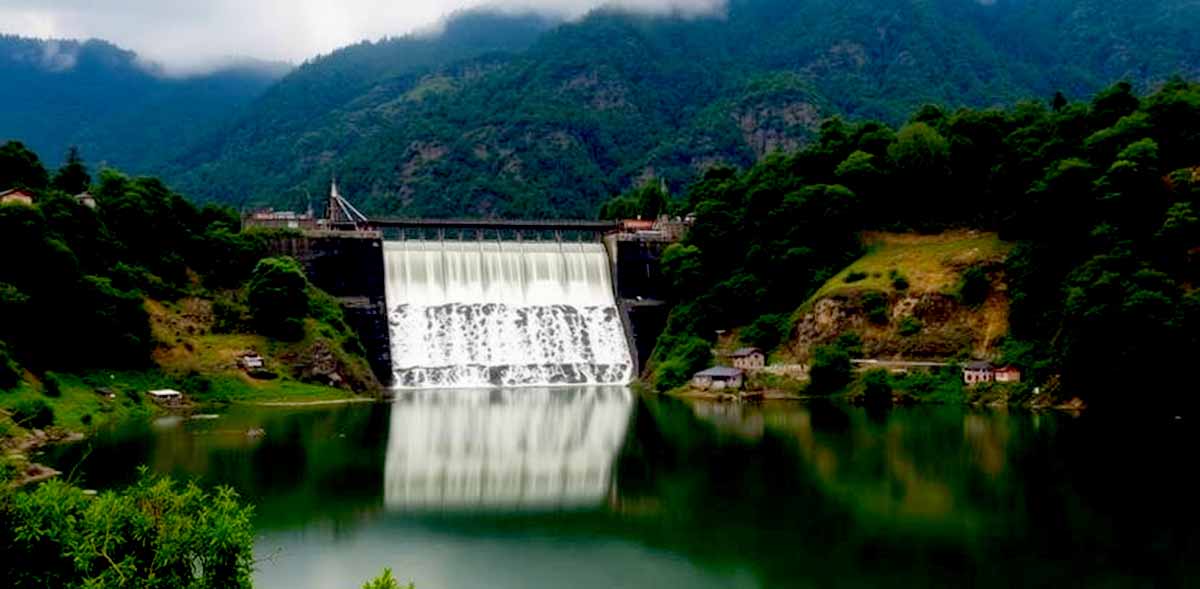
For years, communities of the Siang valley have raised fundamental objections to mega-dam construction. The proposed SUMP – described as a 12,500 MW project in recent reporting, would have profound implications for ancestral settlements, forests, agricultural land, riverine ecosystems and the cultural landscape of the indigenous Adi people. The opposition to these projects is neither ‘sudden’ nor an ‘externally manufactured phenomenon’. Resistance to large dams in the Siang basin has a history stretching back decades. Academic research published in 2025-26 documents the long-standing conflict between state-led hydropower development and indigenous communities in the valley.
The communities have repeatedly been at the forefront of the opposition. In 2025, villagers and the SIFF protested the deployment of Central Armed Police Forces in and around areas where SUMP-related pre-feasibility activities were being undertaken. Reports documented the presence of armed forces in multiple villages like Beging, Geku, Yingkiong and Boleng, while project-affected communities demanded their withdrawal. In September 2026, SIFF again publicly objected to the deployment of security forces for SUMP-related PFR activities and reported that project-affected families were demanding both the withdrawal of security forces from the villages and reversal of actions against community-level representatives.
We find this situation profoundly disturbing. Villages inhabited by citizens of India should not become militarized spaces simply because their inhabitants oppose a harmful “development” project. The presence of armed personnel around communities resisting a dam creates an unmistakable atmosphere of coercion. It risks transforming a question of democratic consent, indigenous rights, ecological protection and displacement into a question of law-and-order and national security. That is a completely wrong and unconstitutional approach.
The Siang is not an ‘empty valley’. For the Adi people, the Siang is not merely a water resource waiting to be converted into electricity. The river, forests, mountains and agricultural landscapes constitute an interconnected living cultural and ecological system. The Adi community has described the Siang as ‘Ane Siang’ – the sacred river. The Adi Bane Kebang has also demanded the scrapping of SUMP and withdrawal of the Central Armed Police Forces deployed for project-related activities.
Project-affected communities have repeatedly raised concerns over displacement, loss of ancestral land, destruction of forests, disruption of livelihoods and damage to cultural identity. Independent research also records the profound importance of these territories to indigenous agro-ecological systems and cultural continuity.
Reports have also documented opposition to other mega-dam projects across Arunachal Pradesh, including projects in the Dibang and Siang/Siyom river systems. The experience of the Dibang Multipurpose Project, where indigenous communities have long resisted the project because of its implications for forests, land and livelihoods, should be a warning against repeating the same model of ‘development’ elsewhere.
Consent cannot be replaced by force. We strongly reject the proposition that ‘development’ can be secured by deploying military personnel first and seeking people’s ‘consent’ later. If the government claims that local communities genuinely ‘support’ SUMP or similar mega-dam projects (as the govt propaganda states), the answer is simple: Let the affected communities speak freely. And let their views and rights be respected and given precedence, instead of the vested interests of the dam-builders and corporations.
We demand:
- An immediate end to all oppressive measures against the local communities, SIFF, Bhanu Tatak, Ebo Mili and other community leaders and activists, including by misuse of the FCRA law against Bhanu Tatak.
- Immediate withdrawal of all armed forces / military personnel from the indigenous villages, de-militarization and restoration of space for democratic participation by communities in Govt decisions that affect their livelihoods, ecology and futures.
- Free, fair and transparent public consultations at the village level must be held in the presence of neutral observers.
- Revocation of all clearances and permissions granted to the hydro-electric and power projects in the region, in violation of law and democratic processes.
People across India are keenly watching the developments in Arunachal Pradesh and we will continue to question all arbitrary actions and decisions of the Government that harm the rights of local communities and their environs.
Co-Issued by: National Alliance for Climate and Ecological Justice (NACEJ), All-India Rivers Forum (AIRF) and National Alliance of People’s Movements (NAPM)
E-mail napmindia@gmail.com , nacej.napm@gmail.com