Experts call for better seeds, scientific cultivation, processing and market access to boost farmers’ income
JK, OCT. 30 (ITN): Emphasising the need to translate agricultural research into higher incomes for farmers, a two-day national seminar on niche crops of Jammu and Kashmir commenced at Bhaderwah Campus of Jammu University on Friday, bringing together agricultural scientists, researchers, policymakers and other stakeholders.
Organised by Sher-e-Kashmir University of Agricultural Sciences and Technology of Jammu (SKUAST-Jammu) under HADP Project No. 02, the seminar is themed “Heritage to Enterprises: Unlocking the Potential of Niche Crops in Jammu and Kashmir.”
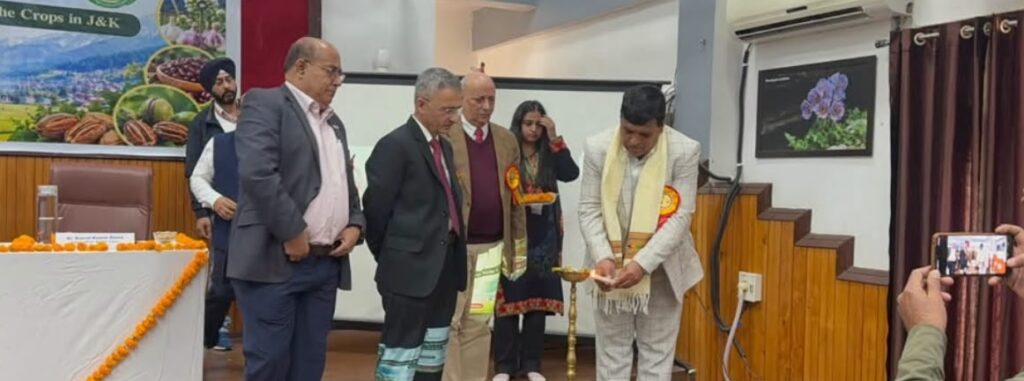
MLA Bhaderwah Daleep Singh Parihar attended the inaugural session as chief guest, while Doda Deputy Commissioner Krishan Lal was the guest of honour. Prof. Anil Kumar, Dean-cum-Registrar SKUAST-Jammu, Prof. Sudhakar Dwivedi, Director Student Welfare, and Kewal Kumar Raina were also present.
The deliberations centred on how traditional crops such as Bhaderwah Rajmash, hill garlic, saffron, Kalazeera, Anardana and pecan nut could become reliable sources of income for farming communities through improved cultivation practices, quality planting material, scientific processing, value addition and organised marketing.
Addressing the gathering, Parihar stressed the need to harness the agricultural potential of Bhaderwah and adjoining hill areas, saying that research initiatives must translate into tangible livelihood opportunities for local farmers.
Deputy Commissioner Krishan Lal highlighted Doda district’s rich agricultural diversity, including Anardana, olive, Gucchi, apple and Bhaderwah Rajmash, and called for greater efforts to unlock their commercial potential.
Prof. Anil Kumar highlighted Bhaderwah’s importance in preserving and promoting the region’s speciality crops, while Prof. Sudhakar Dwivedi stressed the need to overcome production-related bottlenecks and strengthen branding and marketing to secure wider national and international markets.
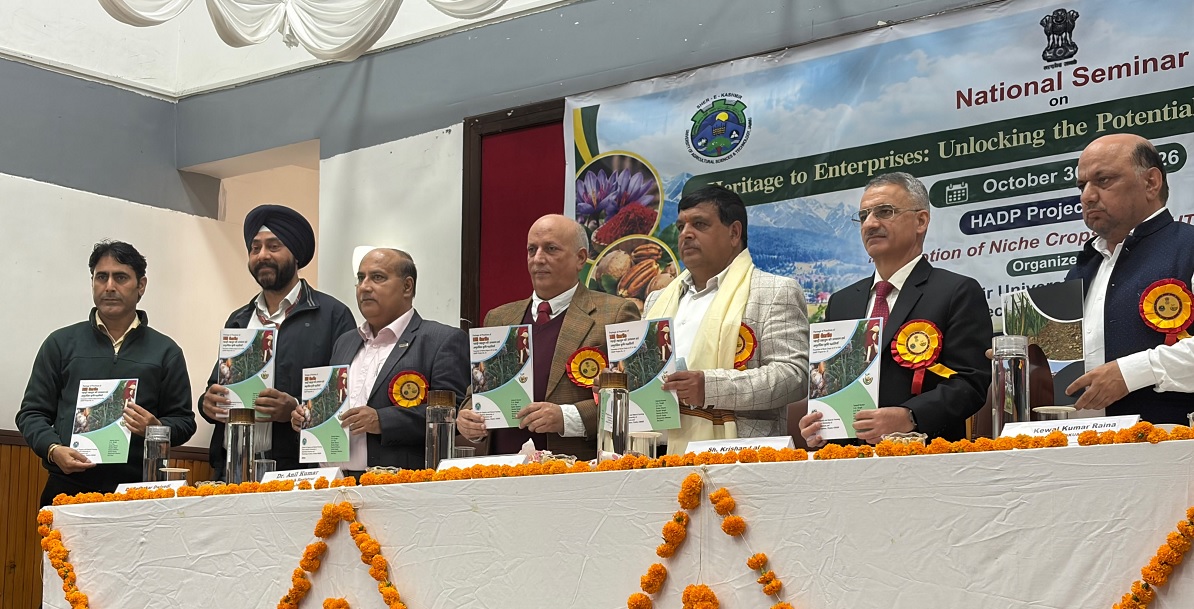
A major highlight of the inaugural session was the release of two publications, “Packages of Practices of Hill Garlic” and “Good Agricultural Practices on Pecan Nut”, intended to provide scientific guidance for improving crop production and quality.
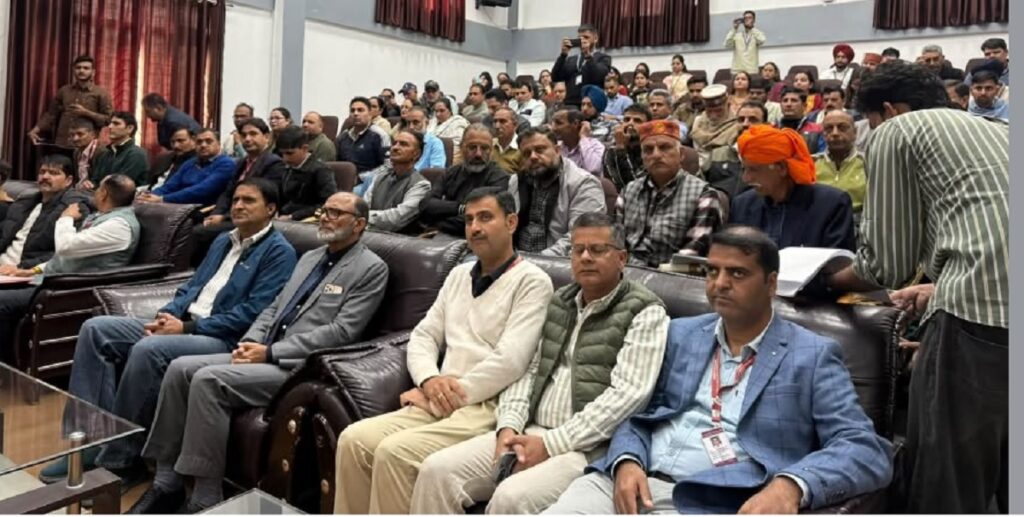
The seminar aims to bridge the gap between agricultural research and farmers’ field-level requirements by promoting stronger institutional collaboration, better value chains and entrepreneurship. Participants are expected to deliberate on ways to ensure that the region’s unique agricultural heritage delivers better economic returns to growers rather than remaining limited to traditional cultivation.
Dr. Vishal Gupta, project coordinator, presented the vote of thanks.
Report : Mansoor Qadir, J&K.