JK, Nov. 23 (ITN): Former Srinagar MP Aga Syed Ruhullah Mehdi has once again taken an uncompromising position on a public issue, this time questioning the use of heavy machinery near the ecologically fragile Sheshnag Lake along the Amarnath Yatra route, triggering a wider debate over environmental protection and development priorities in Kashmir.
In a strongly worded post on X, Ruhullah criticised the BJP over the reported excavation work near the sacred high-altitude lake, questioning the contradiction between invoking religious faith for political support and undertaking activities that could potentially endanger a fragile Himalayan ecosystem.
“A party that wins votes in the name of faith is now taking JCBs to a holy lake,” he wrote, referring to earlier road construction towards the Amarnath cave and warning against treating the Himalayas like a construction site. Citing the recent environmental disaster in Nepal, he demanded an immediate halt to the activity.
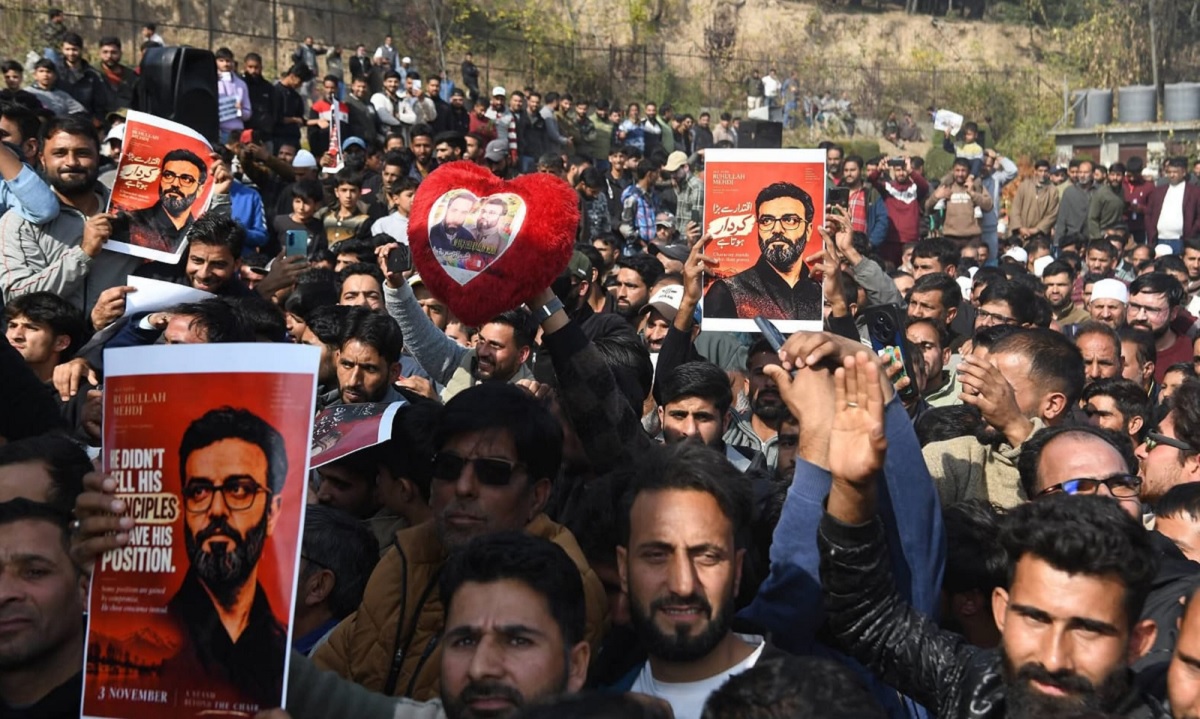
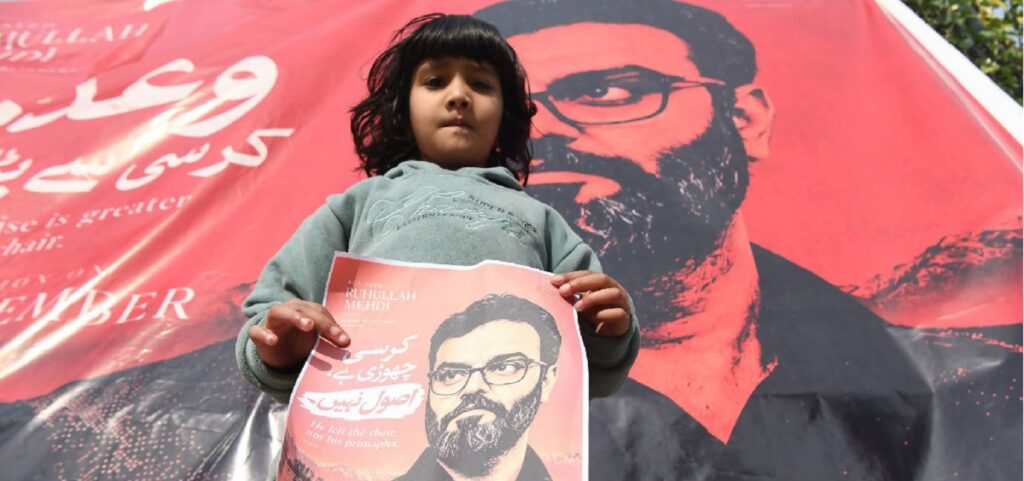
His latest intervention assumes added political significance following his dramatic resignation from the National Conference and his Srinagar Lok Sabha membership, marking a major turning point in his political career.
Ruhullah’s differences with the NC leadership had increasingly centred on the party’s electoral commitments, particularly restoration of Article 370, statehood and the broader political and constitutional rights of the people of Jammu and Kashmir.
His political dissent, however, has not remained confined to constitutional issues or party politics.
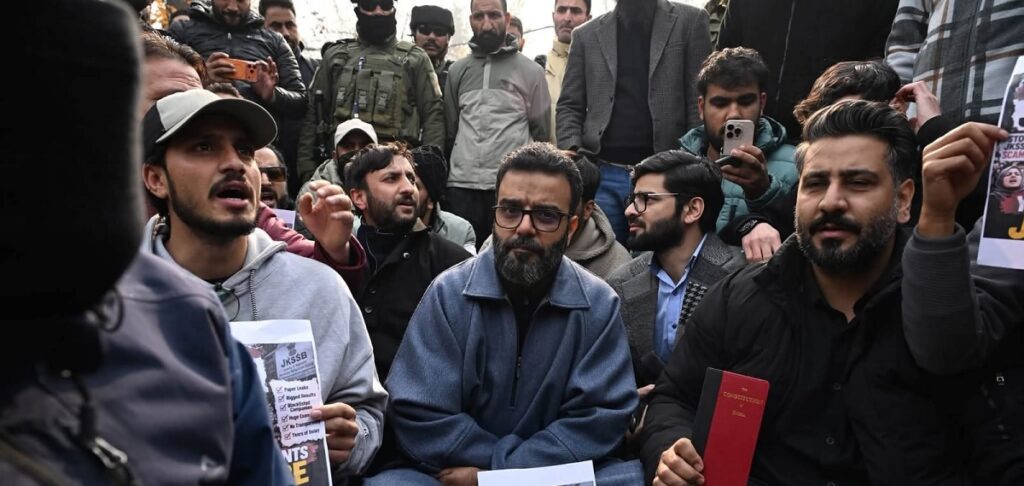
Earlier, he drew considerable attention when he joined protesting students and youth demanding accountability over alleged irregularities, paper leaks and recruitment controversies involving the Jammu and Kashmir Services Selection Board (JKSSB).
In a significant show of solidarity, Ruhullah was seen sitting alongside the protesting candidates, listening to their grievances and sharing the protest platform. The demonstrators carried placards highlighting allegations of paper leaks, rigged results, lack of transparency and recruitment-related irregularities, demanding justice for thousands of aspirants whose future depends on fair and transparent selection processes.
His participation was particularly significant as he chose to stand with aggrieved students despite the political sensitivities surrounding the issue. It reinforced his image as a leader willing to associate himself with public protests rather than limiting his role to political statements and parliamentary interventions.
From standing alongside unemployed youth demanding fair recruitment to raising the demand for restoration of constitutional rights and now questioning activities in Kashmir’s fragile Himalayan environment, Ruhullah appears to be expanding his political engagement beyond conventional party boundaries.
His departure from the National Conference has also raised questions about the emergence of an independent political voice in Kashmir, particularly among sections of youth and voters who remain dissatisfied with the pace of delivery on major electoral promises.
Nevertheless, his latest stand on Sheshnag raises an equally important question for the administration: can infrastructure development and pilgrimage-related requirements be pursued without putting Kashmir’s environmentally sensitive mountain regions at risk?
Authorities must clarify the nature of the work, the environmental assessments undertaken and the safeguards adopted around the glacial lake. Religious significance, tourism and infrastructure development cannot become grounds for overlooking ecological concerns.
Whether on constitutional rights, unemployment, recruitment transparency or environmental protection, the common thread in Ruhullah’s recent interventions is his demand for accountability.
For Kashmir, where public trust in political promises has repeatedly been tested, the real challenge will be translating such voices into sustained action and tangible results for ordinary people.
Report : Mansoor Qadir, J&K.