

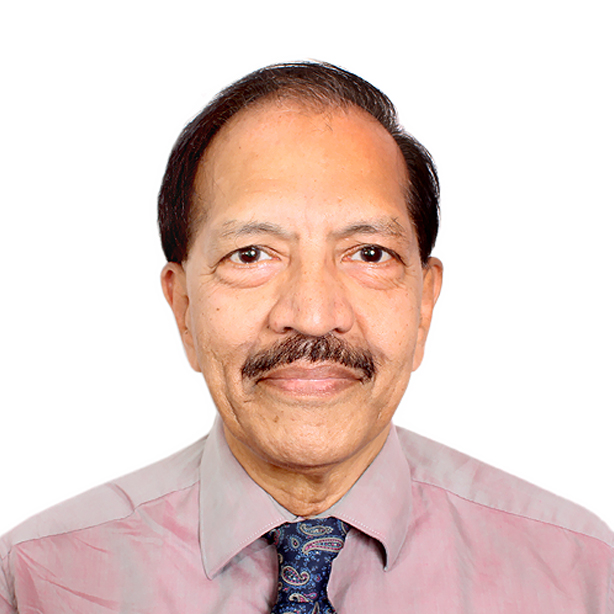
 Dr. A. K. Merchant*
The world is moving towards its destiny as decreed by the Cosmic Will for our Age (Yuga). When Sage Vishwamitra came to Ayodhya to ask the king Dasharatha to depute his young son, Rama, then only 16 years old, to destroy the demons (evil forces), were obstructing his yajna (ritual worship), although the king hesitated at first, at the urging of Sage Vasishtha, he allowed Rama to accompany Sage Vishwamitra. Their journey began at dawn, and Rama was woken up with words that have echoed for centuries: “Kausalya supraja Rama purva sandhya pravertate; uttishtha narashardula kartavyam daivam ahnikam.” The English translation reads: “O Kausalya’s son, Rama, the early morning begins; get up, O tiger among men, and perform the daily duties of God.” The most important challenge of our Age, AI including, is that human capacity to address problems has expanded significantly even as human commitment to working collectively remains woefully inadequate. Human ingenuity is able to build machines far more intelligent. We have been able to decode genomes and, through advances in science, technology, and telecommunication, connect billions of people.
The distribution of benefits from AI will be inextricably linked to conscious choices about investment, innovation, training, and the protection of workers and employees. There is a need for evolving transparent and shared standards and benchmarks for safety, independent evaluation of high-impact systems, and accountability-based remedies when automated decisions can potentially cause harm. The countries of the Global South have an important stake in the framing and designing these mechanisms. India has steadily expanded its leadership role building on the success of G20 and other global forums. However, it has to provide credible institutional reform within the country and sustained success abroad.
I had the privilege to participate and address the Global Summit on AI held last year and since that time much water has flown with respect to the AI technological acceleration and related issues of quantum computing, block chain architectures, autonomous systems, generative AI, and decentralized digital platforms. These technological advancements, while offering transformational societal and economic benefits, have also generated profound legal, ethical, and regulatory complexities. Many of the Speakers had addressed in great depth the legislative and governance frameworks that still remain inadequate to address the multidimensional ramifications of the emerging technologies, particularly in relation to data privacy, algorithmic accountability, AI explainability, digital sovereignty, cybersecurity, and techno-legal liability.
At International Conference on Cyberlaw, Cybercrime & Cybersecurity (ICCC 2026), as it happened last year there was the convergence of jurists, policymakers, regulators, corporate leaders, AI scientists, digital rights advocates, and civil society stakeholders from across jurisdictions. The 3-days of deliberations was concisely incorporated in the Outcome Document themed: “Converging Futures: Cybersecurity, Cybercrime & AI in the Autonomous Era”.
Everyone was unanimous that AI can provide personalized learning opportunities, support medical diagnosis and examination, and improve the quality of various public services. At the same time, adverse implications include concentrating influence through economic disparities, exacerbating discrimination already prevailing in society, and creating an environment where decisions with significant consequences are made without the opportunity to question or challenge them. The evaluation done by International Labour Organization in 2025 recognized that one in four workers around the world held jobs with some linkages to generative AI. This exposure does not, on its own, lead to job loss, as many roles and responsibilities are going to re-imagined rather than disappear.
While algorithms work on numerical values, the conference organizers and participants should acknowledge the critical role of religious aka dharma communities, for the implementation of The Rome Call for AI Ethics, an interfaith and multi-sector commitment promoting “algorethics”—the ethical development and use of artificial intelligence—signed by representatives of the three Abrahamic religions (Judaism, Christianity, and Islam) at the Vatican in January 2023 and subsequently by representatives other religious communities–Bahá’í Faith, Buddhism, Hinduism, Jainism, Sikhism, Shintoism, Taoism in July 2024 at Hiroshima. Humankind must create a language that can translate moral values into something computable for the machine. Because in the man-machine relationship, the true expert and bearer of values is the human being. Human dignity and rights point out the need to protect humanity from the adverse impact of “man-machine relationship.” AI and digital innovations should be designed to empower individuals to contribute meaningfully to their communities and society.
In the above context as a member of Bahá’í Faith let me share some thoughtful and spiritually grounded perspective on AI and emerging technologies, emphasizing their potential to uplift humanity. When AI is guided by moral and ethical principles for the betterment of the world humanity will experience profound transformation leading to the extension of scientific research, to raising of the standards of physical health, to the sharpening and refinement of the human brain, to the more judicious utilization of the finite resources of the planet, to the creation of new laws and legal instruments.
The Bahá’í Writings predict the establishment of a world commonwealth in which all nations, races, creeds, castes, and classes are closely and permanently united, and in which the autonomy of its state members and the personal freedom and initiative of the individuals that compose them are definitely and completely safeguarded. This commonwealth, it is further envisaged would comprise of a world legislature, whose members will, as the trustee of entire humankind, ultimately control the entire resources of all the component nations, and will enact such laws as shall be required to regulate the life, satisfy the needs and adjust the whole gamut of relationships of all of humanity. It would result in coherence among the three protagonists that constitute every society–individuals, institutions, communities. A world executive, backed by an international police force, will carry out the decisions arrived at, and apply the laws enacted by the world legislature, and will safeguard the organic unity of the whole commonwealth. A world tribunal will adjudicate and deliver its compulsory and final verdict in all and any disputes that may arise between the various elements constituting the universal system.
The Faith encourages a just transition, where technological progress is aligned with values like justice, equity, and the oneness of humanity. Bahá’ís stress that technology is not neutral—it reflects the values of its creators and users. They stress the need for inclusive design, ensuring AI serves all of humanity, not just a privileged few. Educational curricula and all involved with the training and capacity building activities should foster adaptation, critical thinking and judgment, not just reward the acquisition of certificates. There is no denying that AI has amazing possibilities, namely speed up innovation, make services better and provide new economic opportunities. A country’s growth cannot be measured just by increased earnings, sophisticated technology or increasing economic output. It must also be seen in the dignity, security and possibilities given to its people. India’s biggest issue may not be teaching machines to act like people but making sure that humans do not become less valued in the process. Therefore, the wake-up call of Sage Vasishtha takes on a new meaning in the life of present-day civilization.
————————-
*The writer is a social worker, independent researcher, & member of Bahá’i Faith in India. Views expressed are personal.