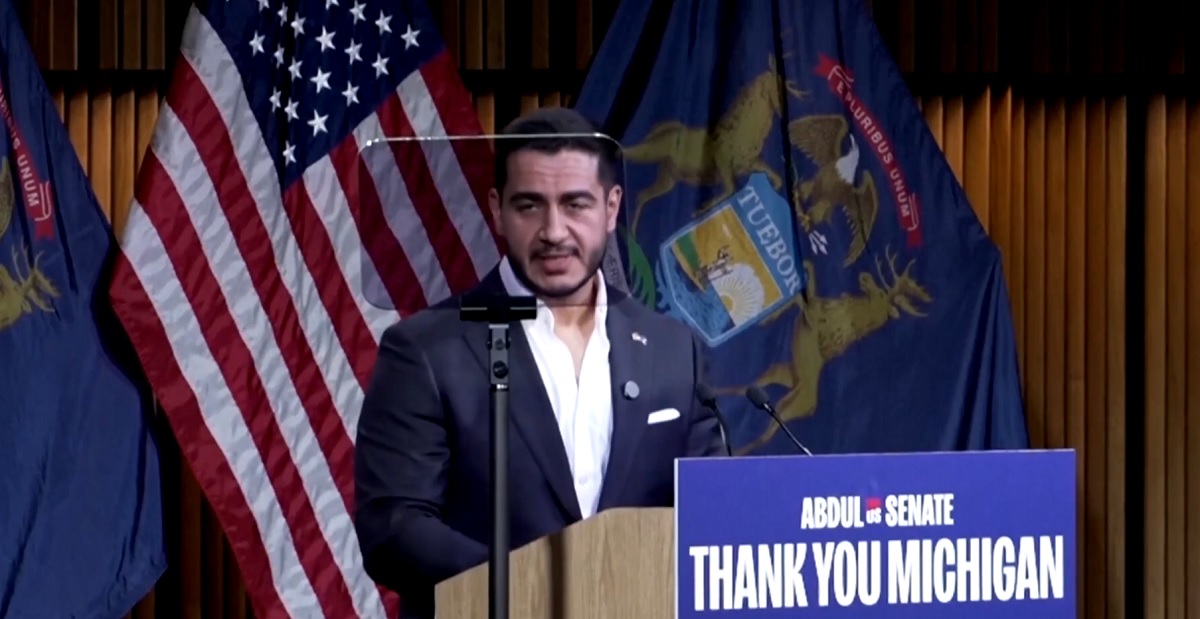
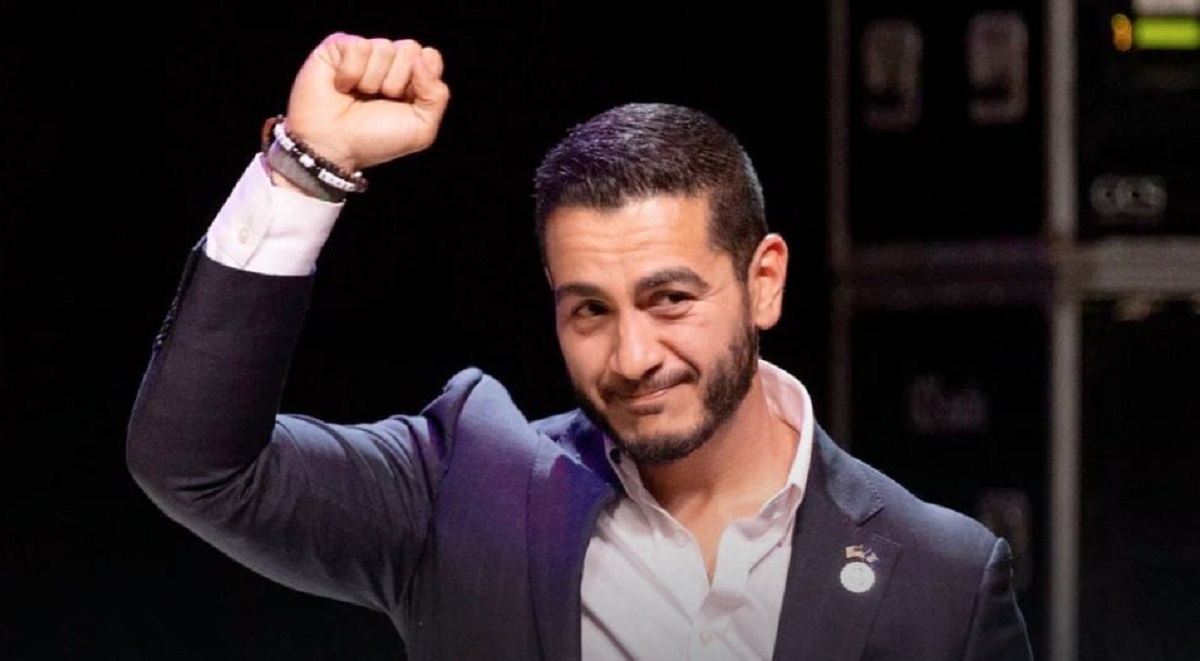
Democrat Abdul El-Sayed has won Michigan’s U.S. Senate race, defeating Republican Mike Rogers and making history as the first Muslim ever elected to the U.S. Senate. But one claim has drawn particular attention: that he received around 60% of the Jewish vote in Michigan.
The claim is based on a real poll, but it needs important context. The 60% figure does not come from CNN’s official exit poll; it comes from a survey of Jewish voters who cast their ballots before Election Day.
Who is Abdul El-Sayed?
Abdul El-Sayed is a progressive Democrat, a physician and former public health official, and the son of Egyptian immigrants. At 42, he defeated former Republican congressman Mike Rogers in one of the most closely watched Senate races of the 2026 midterms.
His victory keeps Michigan’s Senate seat in Democratic hands and gives the party’s progressive wing a major breakthrough in a crucial battleground state. He will assume office in January 2027.
The historic first
El-Sayed’s win carries historic weight because he will become the first Muslim to serve in the U.S. Senate. Major outlets including Reuters, the Associated Press, CBS News, NPR, and the BBC confirmed the result.
His election also marks a shift in the visibility of Muslim Americans in national politics. While Muslim Americans have served in Congress before, no Muslim candidate had previously won election to the Senate.
Where did the 60% figure come from?
The widely shared claim that El-Sayed received “around 60% of the Jewish vote” comes from a Mercury Public Affairs survey of 482 Jewish voters who voted early. The poll was sponsored by The Jewish Majority, an advocacy group led by former AIPAC veteran Jonathan Schulman.
According to the survey, El-Sayed received 60% support in the Senate race among Jewish early voters, while Rogers received 36%. Another 5% said they left the Senate race blank.
Why “CNN said” is misleading
CNN does run voter polls for the 2026 election, but the 60% figure was not CNN’s own statewide exit-poll finding. It was reported by The Forward based on the Mercury Public Affairs survey.
So the precise wording should be: “A poll of Jewish early voters found that 60% backed El-Sayed.” It should not be presented as a definitive measure of how all Jewish voters in Michigan voted.
Why this result surprised many observers
El-Sayed’s campaign was marked by strong criticism over his positions on Israel. He opposed U.S. military aid to Israel and described Israel’s war in Gaza as genocide—positions that made him a target for pro-Israel groups and Republican opponents.
Mike Rogers made a major effort to win over Jewish voters who had concerns about El-Sayed’s stance. Some Jewish leaders and moderate Democrats also publicly opposed El-Sayed or encouraged voters to consider alternatives.
A community divided, not united
The poll suggests a more complicated reality than a simple “Jewish voters backed El-Sayed” headline. While 60% of Jewish early voters supported him in the Senate race, 79% supported Democratic gubernatorial candidate Jocelyn Benson in the same survey.
That 19-point gap indicates that El-Sayed’s Israel positions did cost him some support among Jewish voters, even though he still led Rogers among those surveyed. The Times of Israel similarly described Michigan’s Jewish community as deeply divided by the race.
What El-Sayed’s win means
El-Sayed’s victory is significant for three reasons. First, it makes him the first Muslim U.S. senator. Second, it strengthens the Democratic Party’s hold on a key swing-state Senate seat. Third, it shows that a progressive candidate with sharply critical views on Israel could still win statewide in a competitive race.
But it would be wrong to treat the result as a sweeping endorsement of every position he took. His narrower support among Jewish early voters, compared with other Democratic candidates, shows that his campaign created real political tension within part of the Democratic coalition.
The bigger 2026 picture
El-Sayed’s win came during a broader strong night for Democrats in the 2026 midterms. Democrats gained control of both the House and Senate, delivering a major setback to President Donald Trump and the Republican Party.
In Michigan, Democrats also retained the governor’s office, with Jocelyn Benson winning the gubernatorial race. El-Sayed’s Senate victory therefore formed part of a wider Democratic surge in a state that remains central to presidential politics.
The viral claim is mostly true but imprecisely framed. Abdul El-Sayed did win Michigan’s Senate race, did defeat Mike Rogers, and did become the first Muslim elected to the U.S. Senate.
The 60% Jewish-vote figure is also real, but it refers specifically to a poll of 482 Jewish early voters—not to CNN’s official exit poll and not to the entire Jewish electorate. The more accurate takeaway is that El-Sayed won majority support among surveyed Jewish early voters despite intense criticism over his Israel and Gaza positions, while still losing a meaningful share of that community to Rogers or abstention.
Report : ITN desk.