 Najmuddin A. Farooqi.
The extraordinary journey of an actor whose artistry, dignity and understated brilliance transcended generations and left an indelible imprint on Indian cinema and beyond.
“Sukoon-e-dil ke liye kuchh to ehtemaam karoon,
Zara nazar jo mile phir unhein salaam karoon.
Mujhe to hosh nahin, aap mashwara deejiye,
Kahaan se chhedoon fasaana, kahaan tamaam karoon.”
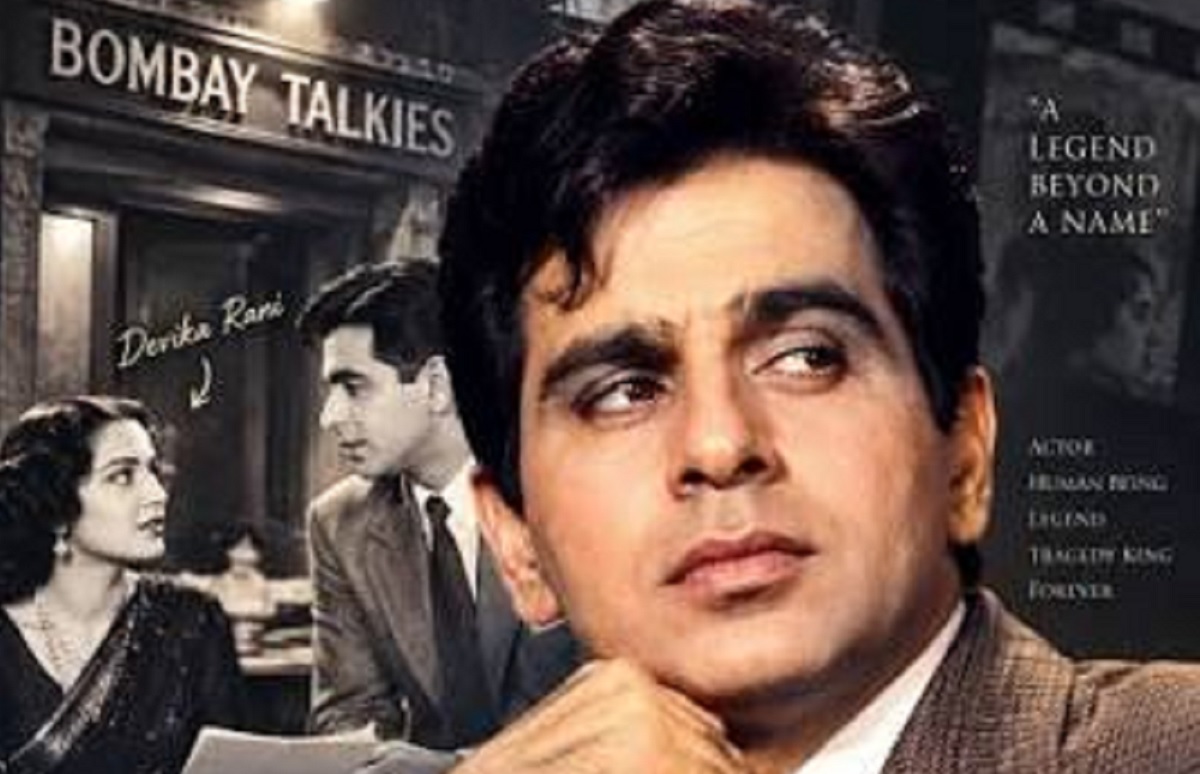
These beautiful Urdu couplets offer an unusually appropriate opening to a tribute to Dilip Kumar, born Mohammad Yousuf Khan. Their popularity received an additional impetus when Dilip Saheb recited them at the inaugural of an international mushaira. There was something distinctly characteristic about that moment: a legendary actor, equally at ease with the language of poetry, lending his magnificent voice and distinctive delivery to the timeless beauty of Urdu verse.
Writing about Dilip Kumar is an exercise in admiration, but it is also an exercise in restraint. When confronted with a personality of such extraordinary stature, words can easily become exaggerated and adjectives lose their meaning through excessive use. Yet, in his case, even an elaborate description may fall short of capturing the complete personality.
He was much more than a successful film star. He was an institution in himself: an actor of exceptional versatility, subtlety and psychological depth; a man of grace, dignity, confidence and determination; an intellectual with an impressive command of language, an accomplished conversationalist and an orator whose presence could command an audience without the slightest theatrical effort. “Few of his countless followers know that he is always a voracious reader”, says his wife Saira Banu.
His personality possessed a rare combination of solitude amidst a crowd and an unmistakable presence without demanding attention. His voice, diction, pauses, expressions, gestures and above all his eloquent silences became instruments of an art that few could reproduce.
The actor who transformed acting itself
Dilip Kumar was among the foremost pioneers of psychologically nuanced and naturalistic acting in Indian cinema. Often described as the pioneer of method acting in India, he brought an extraordinary degree of emotional authenticity to the characters he portrayed.
He did not merely recite dialogues; he inhabited the characters. His expressions could communicate what an entire passage of dialogue might fail to convey. His silences were as meaningful as his words and his eyes could reveal an entire world of emotions.
His portrayal of Devdas, his commanding presence in Mughal-e-Azam, the earthy authenticity of Ganga Jamuna and his remarkable versatility in Ram Aur Shyam represent only a small selection of his artistic achievements. Whether portraying a tragic lover, a determined individual, a historical character, his wit and humour or a man caught in the complexities of human relationships, he brought a distinct identity and credibility to every performance.
His influence extended far beyond his own generation. Several contemporary and succeeding actors studied his mannerisms, dialogue delivery, expressions and screen presence. Some openly acknowledged his influence, while others absorbed elements of his acting style into their own performances. Yet, imitation could never quite reproduce the original.
It is significant that Satyajit Ray, one of the most distinguished filmmakers in world cinema, described Dilip Kumar as the ultimate method actor. Javed Akhtar, the internationally recognised screenwriter and lyricist, also observed that Dilip Kumar had been exploring the depth of this style of acting even before method acting became widely celebrated through Hollywood personalities such as Marlon Brando. Amitabh Bachchan, expressed his admiration in particularly revealing terms. Speaking about Ganga Jamuna, he recalled watching the film repeatedly and marvelling at Dilip Kumar’s command over the Awadhi dialect. He regarded that performance as the ultimate benchmark. Bachchan also observed that when one watched a particular scene enacted by Dilip Kumar, one became convinced that there could never be an alternative to it.
The philosophy of an artist: Quality over quantity
One of the most revealing aspects of Dilip Kumar’s personality emerges from his autobiography, The Substance and the Shadow, published in 2014. He narrated:
“I have consciously never oversold or overexposed myself to the audience. When I look back I feel it was quite risky to be starring in one film when other actors were busy with two or three films on the floors simultaneously. I determinedly decided to work in only one film at a time. It was simply my confidence in the subjects I chose and the hard work I was ready to put into them.”
These words reveal a philosophy that goes well beyond the profession of acting. At a time when commercial considerations often encourage artists to maximise their visibility and accept as many assignments as possible, Dilip Kumar deliberately chose a different path.
He believed in the quality of his work, the strength of the subject and the commitment required to do justice to a character. He understood that an actor’s credibility was not built merely by the number of films released or the frequency of appearances on screen. It was built through preparation, conviction and the lasting impression left upon the audience.
He further explained his reservations about overselling himself and the importance of promising audiences only what an artist could deliver after investing sustained effort and hard work.
This is a remarkable lesson in professional self-respect. It reflects confidence without arrogance, ambition without desperation and success without the compulsive pursuit of publicity.
His public image was never dependent upon constant exposure. He did not need to remain perpetually visible to remain relevant. Indeed, his selective appearances contributed to the anticipation surrounding his work.
Yousuf Khan behind Dilip Kumar
Perhaps the most fascinating aspect of this legendary personality was the contrast between his screen identity and his private self.
The title of his autobiography, The Substance and the Shadow, captures this distinction beautifully. Dilip Kumar was the celebrated public persona; Yousuf Khan was the human being behind that extraordinary image.
His autobiography offers glimpses of a sensitive, reflective, well-read and intellectually curious individual. His interests extended to literature, poetry, history, humour and the works of distinguished writers and dramatists. He was particularly drawn to authors such as Dostoyevsky, Joseph Conrad, Eugene O’Neill and Tennessee Williams. This intellectual engagement was not incidental to his acting. It helped him understand human emotions, conflicting motivations and the psychological complexities of the characters he portrayed.
He was also deeply involved in the creative process of filmmaking. His commitment did not end with accepting a role or memorising a script. He would examine scenes, discuss possibilities and work towards improving the final performance. His collaboration with filmmakers including discussions that continued late into the night, illustrates the seriousness with which he approached his profession. It is this combination of intellect, preparation, imagination and discipline that distinguishes an accomplished artist from a merely popular entertainer.
A personality beyond cinema
There was another dimension to Dilip Kumar that deserves particular recognition: his command over language and his extraordinary gift of expression. His Urdu was elegant, his English articulate and his conversational style distinguished by clarity and composure. He could recite poetry with feeling, discuss literature with intellectual depth and address an audience with the confidence of an experienced public speaker.
His physical appearance was equally striking. His handsome features, expressive eyes, dignified bearing and effortless elegance made him one of the most charismatic personalities Indian cinema has ever produced. But physical appearance alone cannot explain the enduring fascination he commanded. It was the combination of appearance, intellect, artistic excellence and personal dignity that made him exceptional.
He also represented a generation of public personalities who understood the value of privacy and restraint. His life was not a continuous exercise in self-promotion. He allowed his work to speak for him and maintained a certain distance between his private life and the public’s curiosity.
His decision to decline an opportunity to appear in David Lean’s internationally acclaimed Lawrence of Arabia is another interesting illustration of his professional independence. He did not consider an appearance in Hollywood necessary to establish his worth as an actor. His confidence was rooted in the recognition he had already earned through his work in Indian cinema.
An enduring legacy
Dilip Kumar’s contribution cannot be measured merely by the number of films he made, awards he received or commercial successes he achieved. His real legacy lies in the standards he established and the generations of artists he inspired.
He demonstrated that an actor could command enormous popularity without compromising artistic integrity; that restraint could be more powerful than exaggeration; that silence could sometimes communicate more effectively than dialogue; and that professional success need not depend upon constant exposure.
He remained relevant across changing generations, evolving cinematic styles and changing audience expectations. His performances continue to be studied, discussed and appreciated by cinema enthusiasts, students of acting and filmmakers.
There are actors who entertain, stars who captivate and celebrities who dominate public attention. Very few become benchmarks against which the performances of others are measured.
His Humanitarian Side
Beyond the glamour of cinema and the adulation of millions, Dilip Kumar also had a compassionate and socially sensitive side. His concern for the underprivileged, particularly destitute and orphaned children, reflected a belief that privilege and public recognition carried a responsibility towards society. His association with charitable and welfare initiatives revealed a personality that valued human dignity and compassion as much as artistic excellence. This humane dimension adds another meaningful facet to his already extraordinary persona.
Dilip Kumar belonged to that rare category.
His journey from Yousuf Khan to Dilip Kumar was not merely the story of an individual achieving extraordinary success in cinema. It was the journey of an artist who transformed his profession into an enduring art form and his public identity into a cultural phenomenon.
Perhaps the most appropriate tribute to him is to recognise that while the shadow of celebrity eventually fades, the substance of genuine artistic excellence remains.
Dilip Kumar is no longer physically among us, but his voice, his expressions, his poetry, his dignity and his extraordinary artistry continue to inhabit the collective memory of millions.
Some personalities are remembered for what they achieved; a rare few are remembered for what they represented. Dilip Kumar was one of those rare few.
His was not merely an unforgettable career. It was an unforgettable persona.