 Dr. A. K. Merchant*
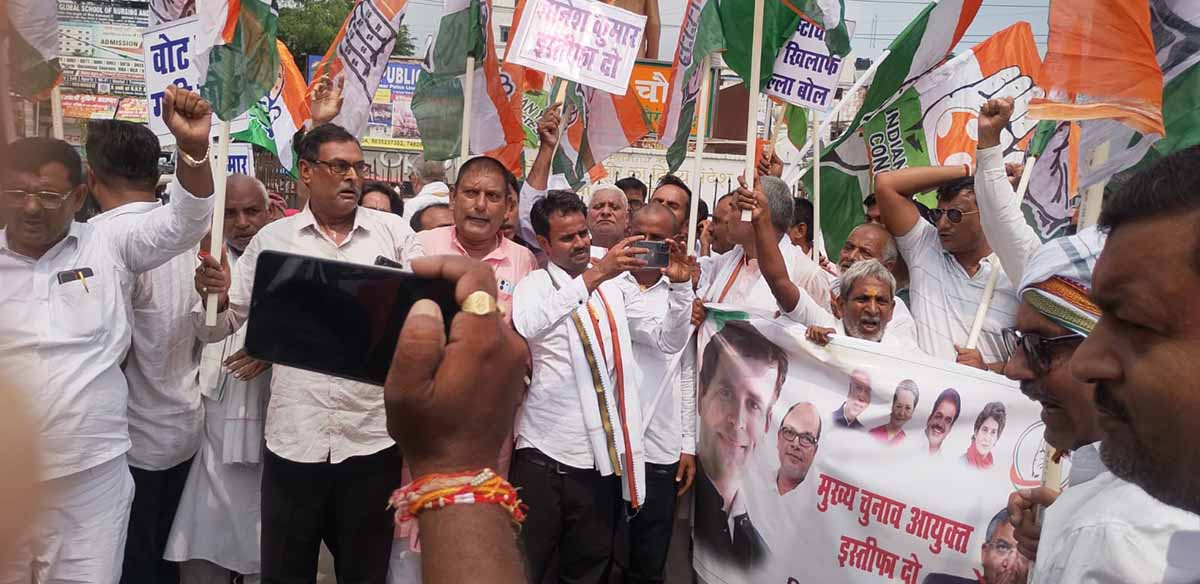
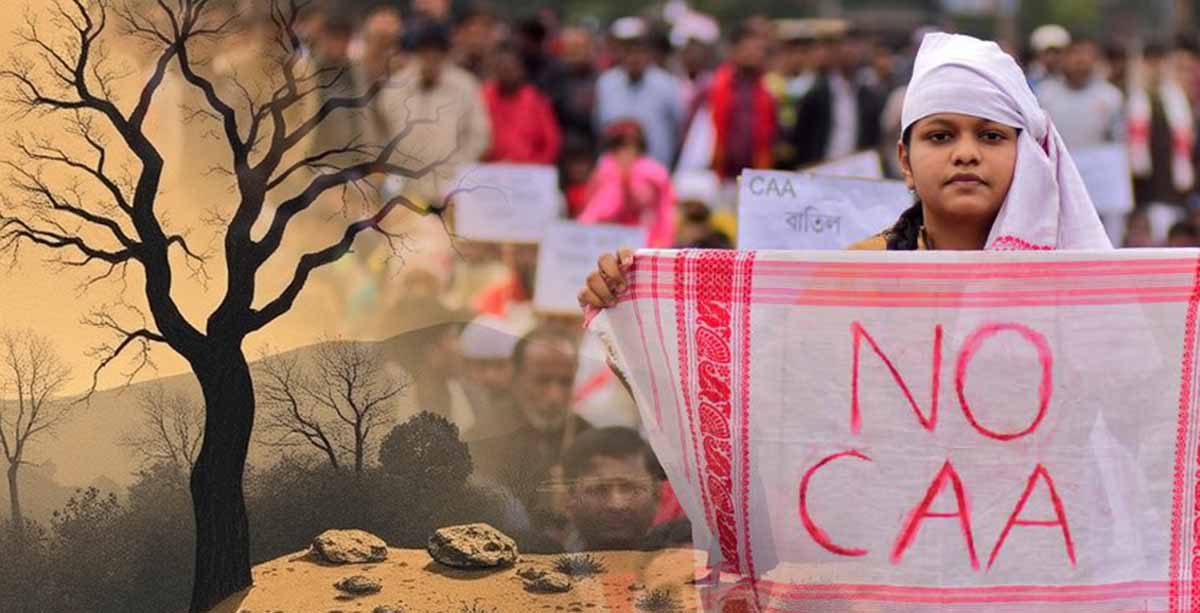
Empowering the youth in India is a crucial challenge. It is very significant for the future of the world. India has the largest number of young people, with the median age of 29 years. They are the largest powerhouse of human potential Young people must view the current times as an unparalleled opportunity to re-write narratives of poverty, inequality, unemployment and underdevelopment. Rather than remaining dreamers, they must become doers. Instead of job seekers, job givers. Change begins with them at a time when the vast majority of the world’s people are sinking into the quagmire of hopeless fatalism. The question before every youngster: Not how do I stand out? But what do I stand for? The recent turmoil at Jantar Mantar and elsewhere in the country is, indeed, very tragic.
Therefore, the things that one puts in life namely friendship, being a well-wisher of humanity, imbued with kindness and generosity, and cheerful disposition, these and many more virtues surely make life worth living. In the Bahá’i Communities wherever I travelled, whether in India or abroad, I experienced their sense of commitment and inner assurance as humankind confronts its destiny. The Faith of Bahá’u’lláh currently 8-million strong, continues to advance from strength to strength increasing in size and developing greater and greater powers for translating into reality the Cosmic Will for our Age: “the earth is but one country, and humankind its citizens.”
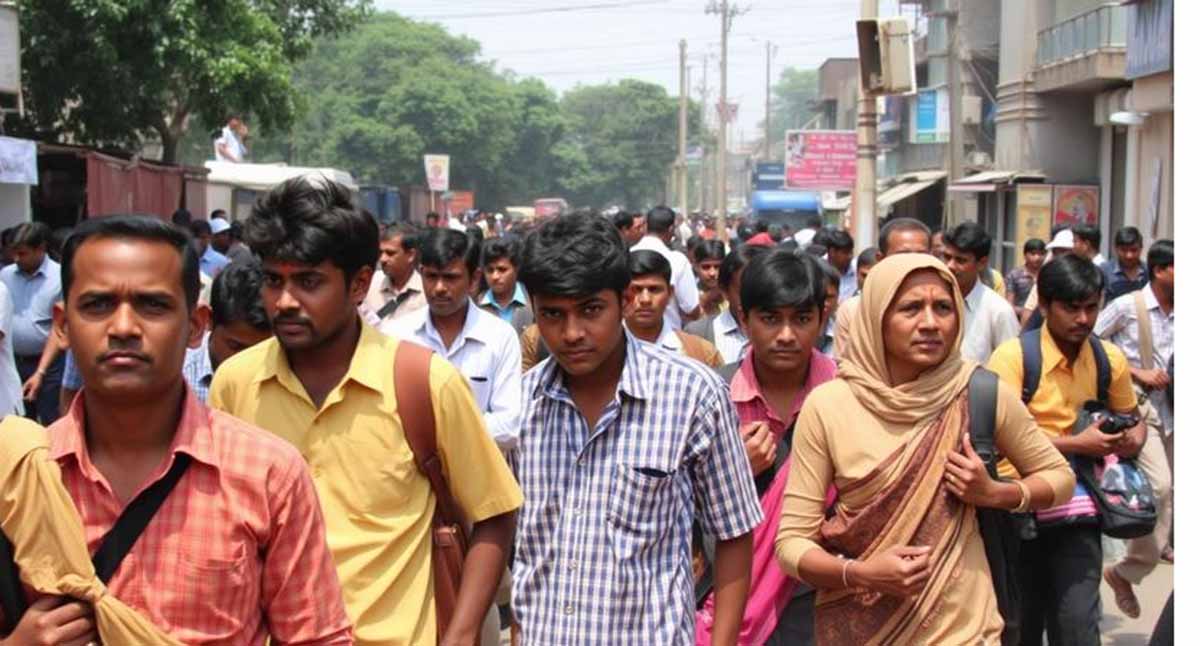
From the pulpit, the lecture platform; from articles and editorials, from books and mass media—radio, television, and a host of enticing and confusing social media—the cry of the human heart for solace, sanity and peaceful living has never been so insistent and louder. Let the young friends remember that life is too short to worry about stupid things, nor should adult seniors be subsumed by regrets and “failures”. The world and its vanities bring to mind an interesting statement of Albert Einstein, “two things are infinite: the universe and human stupidity; and I am not sure about the universe.” Indeed, the heart of every member of the Bahá’i Faith aches at the wretched condition of the world, the lamentable circumstances from which so many people, especially the youth, are unable to gain relief. The latest report titled: State of Working India 2026 says that ‘young graduates in India have always been disproportionately unemployed. But their number has grown terrifically in recent years, along with the debt their families owe for their education.’
Those who do have some form of livelihood are largely in the informal sector, they “are feeling a sense of uncertainty because of the huge disruption in the job market, particularly in the white-collar job market.” Reflecting on the turmoil surrounding the youth in the country one is reminded that “the future of every nation is shaped not in its parliaments or boardrooms, but in its classrooms, laboratories, libraries, innovation centres, and, above all, in the minds and hearts of its young people.” The National Education Policy 2020 (NEP), now in its sixth year, is designed to produce competent, morally and ethically strong and confident youngsters capable of facing the challenges of 21st century. A recent assessment report noted that although India has the largest number of degree holders, 90% of those from Arts & Science are not employable; 80% of engineers are not employable. The actual workforce is 10% to 15% and hence there is low productivity. NEP calls for 2% of GDP for research and 6% for agriculture. As India moves towards the historic milestone of Viksit Bharat 2047, many questions confront us: Will India become a larger economy? Or will it become a greater civilization? Will the country create more wealth? Or will it create more wisdom? Will we produce more graduates? Or will we nurture more leaders? The answer depends on four timeless values, or in fact, four pillars: Competence. Character. Courage. Self-Confidence! The coming decades would be fraught with unforeseen uncertainties. In order for the young people to steer the country in the right direction it is not those who possess the most information, but those who possess the greatest capacity to think critically, innovate creatively, solve complex problems, and continue learning throughout life mindful of moral imperatives. India needs scientists with ethics, entrepreneurs with compassion, administrators with fairness, teachers with dedication, and leaders with humility.
From time to time, the timeless wisdom as well as lived experiences of India’s role models—Swami Vivekananda, Gurudev Tagore, Mahatma Gandhi, Babasaheb Amedkar, A. P. J. Abul Kalam, and other great souls–are celebrated. To this end the educational activities and capacity building programs of the Bahá’i Faith provide a refreshingly insightful perspective that are truly world-embracing. Rather than continuing to hold on to past outworn concepts and unworkable assumptions, at times even conflicting, the Bahá’i educators and resource persons, backed by almost half-a-century of tried and tested curricula materials, are laying unshakeable foundations upon which humanity’s future could be built. Anyone who participates in the unfolding process launched by Ruhi Training Institutes would be immediately struck by the power of unity of thought and unity in action. This is also powerfully reflected in UNESCO’s educational framework for the 21st century titled: Learning: The Treasure Within anchored upon four pillars—Learning to Know, Learning to Do, Learning to Live Together, Learning to Be.
Crises are evident on every front. No nation, howsoever powerful, can provide the wherewithal progress and peace in the world. Economically, national markets are dependent on fluctuations in the comparative valuation of currencies, over which there is little control. The concentration of wealth is polarized: poor nations struggle to develop while feeding large populations. These same nations stagger under a growing debt; major defaults could result in worldwide economic collapse. The madness caused by wars and conflicts strain national budgets, threaten to spiral out of control that could result into World War III raising doubts about humanity’s survival. Major powers no longer adhere to the delicate stalemate of Cold War days rather the proliferation of missiles and drones and possibility of nuclear weapons falling in the hands of non-state actors—all of these greatly enhance the potential for global catastrophe. On the other hand, despite decades of multilateral endeavours to tackle the spread of terrorism, it continues to disrupt social stability and brings new challenges. How does a nation strike back when the enemy is not another nation, but a formless group that blends into the population?
Through a collective act of will guided by the Universal House of Justice, the international governing council of the Faith, the foundations for a better world are being laid. For Bahá’is, the current critical phase in the march of civilization, as we know it, is a seminal hour of hope and potential. The Teachings of Bahá’u’lláh are no mere abstract system of ethics evolved in the peace and quiet of scholarship, no mere philosophy of virtue or truth compiled from the riches of the past, no sociology or comparative religion representing aspiration and goodwill with executive power. Far from threatening diversity or entrenching homogeneity, His message reconciles the strength and beauty that comes with embracing particular identities with a greater sense of a shared belonging. Transcending the limitations of race, class, creed, caste, nationality and religion the Bahá’i Faith offers a blueprint and step-by-step approach for the establishment of a new World Order. All are cordially invited to study the Bahá’i Writings that explain why the existing status quo of a defunct united nations system and various multilateral agencies are increasingly incapable of resolving present-day national and international issues.
The above blue-print provides the methodology of how a world body which will prevent war; a world parliament for enacting legislations, a world court to settle disputes between countries, as well as the global legal framework whereby the entire resources of all the component nations motivated by the belief that all humanity are the children of one Creator, belong to the same human family, are members of the same human race, are harnessed. In the world civilization of the future, as envisaged by Bahá’u’lláh, trade barriers will disappear, everyone will understand that capital and labour depend upon one another, the finite resources of the planet are the birth-right of every woman, man, youth and child. There will be no more religious strife. Spiritual resources would be perfectly coupled with the material needs of everyone. A system of consultative bodies at local, regional, national and global levels, whose members are elected on the basis of confidential voting would govern the affairs of every community as per the identified geographic spheres.
It is the younger generation that has the primary responsibility of the betterment of the world, a world freed from greed, violence, confusion and chaos. The transition will not be easy. In an age of global interdependence, the forces propelling new forms of interconnection, particularly as Artificial Intelligence becomes a dominant feature of everyday life, makes the necessity of accepting the blueprint offered by the followers of the Bahá’i Faith inevitable. For, there is no other better alternative.
————————————–
*The writer is a social worker, independent researcher, & a member of the Bahá’i Community of India.