Selective outrage weakens justice; civilians everywhere deserve equal protection, accountability and human dignity.
 Najmuddin A. Farooqi.
I believe every human life is priceless. Whether that life belongs to an Israeli, a Palestinian, an Iranian or anyone else, its value cannot be determined by nationality, religion, ethnicity, political allegiance or ideology.
Yet the continuing conflicts of our time suggest that humanity has still not learnt this elementary lesson. Too often, we mourn victims belonging to our own political, religious or national camp while explaining away or ignoring the suffering of others. That is not justice; it is selective humanity.
My purpose here is therefore neither to defend one government nor to condemn an entire people, but to apply one standard to all: civilians must be protected, unlawful killings must be condemned, and those responsible must be held accountable regardless of who commits them.
The Hamas-led attack of 7 October 2023 was a horrifying assault on human life. Approximately 1,200 people were killed in Israel and 252 were taken hostage, according to UN material. Civilians were among those killed and the hostages included women, children and older people. Nothing not occupation, political grievance, blockade, discrimination or any other historical injustice can justify killing civilians or taking them hostages.
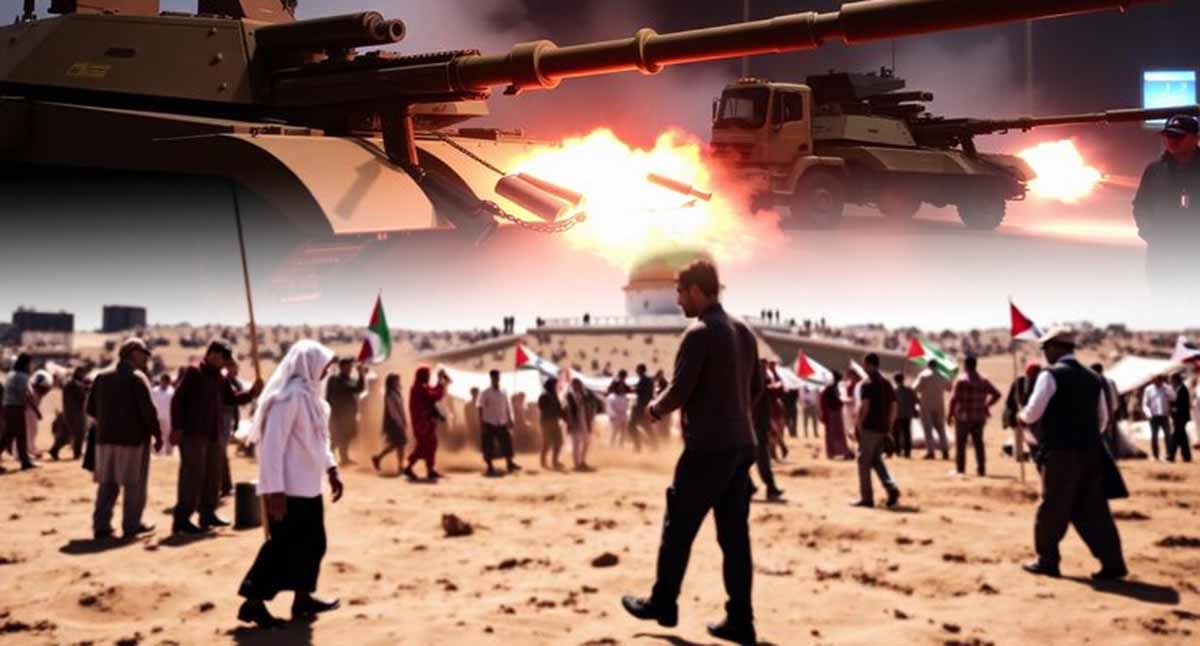
Subsequently the enormous destruction inflicted upon Gaza can that be dismissed as an unavoidable consequence of the original crime? No absolutely not. The UN humanitarian reporting continues to describe mass displacement, civilian casualties and severe restrictions on access to food, water, healthcare, shelter and other essential services. The scale of destruction is staggering, with tens of millions of tonnes of debris across Gaza and tens of thousands of people estimated to have suffered life changing injuries. These are not merely statistics. Behind every number is a human being a child, mother, father, brother, sister or grandparent with hopes, relationships and a life that mattered.
The Disastrous Protests
There is another human tragedy that deserves far greater international attention: the suppression of protests in Iran beginning in December 2025. The protests erupted on 28 December following a sharp collapse of Iran’s currency, soaring inflation and worsening living conditions. What began with shop closures and economic grievances in Tehran’s Grand Bazaar rapidly spread nationwide, developing into broader demands for dignity, freedom, human rights and political change.
A government has a legitimate responsibility to maintain public order. Large demonstrations can become disorderly and governments have a duty to protect citizens, property and essential institutions. But that responsibility is not an unlimited licence to use lethal force.
Amnesty International and Human Rights Watch documented the use of firearms, metal pellets, tear gas, water cannon and beatings against protesters and bystanders. Amnesty subsequently reported mass unlawful killings, particularly on 8 and 9 January, amid an internet shutdown that made independent verification extraordinarily difficult.
The precise death toll remains disputed. Iran’s Supreme Council of National Security reported 3,117 deaths. UN Special Rapporteur Mai Sato said she had received information indicating that more than 5,000 people had been killed, with medical sources suggesting the number could potentially be much higher. Claims of 20,000, 30,000 or 40,000 deaths should therefore not be presented as established fact without independent verification. The communications blackout and restrictions on independent reporting make accurate assessment particularly difficult. But uncertainty over the precise number must never become an excuse for indifference to the deaths already documented.
When the State Turns Against Its Own People. What followed is equally disturbing. Amnesty International reported mass arbitrary arrests, enforced disappearances, torture and other ill-treatment, restrictions on gatherings and pressure on bereaved families. Thousands were reportedly detained, while subsequent repression included politically motivated executions and further arrests. Six months after the January killings, Amnesty warned that the international community’s failure to pursue accountability risked perpetuating a cycle of repression and impunity.
Iranian citizens protesting against economic hardship, repression or political injustice were human beings before they were protesters. Their political opinions do not make their lives less valuable. The scale, intensity and manner of this repression could ultimately make it one of the most disturbing episodes of state oppression against a government’s own people in modern history. This is not an assertion that every casualty figure circulating publicly has been verified. It is a reflection on the reported scale and character of the repression.
There is also a profound irony here. A government claiming religious or ideological legitimacy cannot claim immunity from universal principles of justice. If human life is sacred, it must remain sacred even when the victim stands against the State. The Politics of Selective Outrage. There is an uncomfortable pattern in international discourse. When an armed group kills civilians, some immediately condemn terrorism. When a government kills civilians, the same people may search for political explanations or security justifications.
Conversely, when a government associated with one’s political opponents commits abuses, outrage can become absolute, while similar abuses committed by one’s own allies are rationalised. This double standard is one of the greatest obstacles to genuine peace. The same principle must therefore apply to Israel, Hamas, Iran, the United States and every other state or armed organisation:
Civilians are not legitimate targets. Hostages must be released. Collective punishment is unacceptable. Torture and extrajudicial killings are unacceptable. Deliberate attacks on civilians are unacceptable. Serious violations of international law must be investigated irrespective of the identity of the perpetrator. Military power does not confer moral immunity.
Humanity Must Come Before Identity. I do not romanticise every protest movement, nor do I believe every allegation made by a government, opposition group, activist organisation or media outlet automatically represents the truth. Evidence must be examined carefully, numbers verified and context considered.
But there is an essential distinction between explaining violence and justifying it. We can acknowledge Israel’s security concerns without justifying unlawful harm to Palestinian civilians. We can condemn Hamas’s massacre and hostage-taking without accepting collective punishment of Palestinians.
We can recognise Iran’s responsibility to maintain public order without accepting unlawful killings of protesters. We can condemn Iranian repression without treating the Iranian people as responsible for the actions of their government.
And we can criticise military actions by the United States or Israel without supporting the Iranian government’s repression of its own citizens. That is not political neutrality. It is moral consistency. One Standard for Every Human Being. The world does not need another hierarchy of suffering in which one dead child matters more because of the flag under which he or she was born.
An Israeli child is not more valuable than a Palestinian child. A Palestinian child is not more valuable than an Iranian child. An Iranian protester is not less deserving of life because he or she challenges the government. Every human being possesses an inherent dignity that precedes nationality, religion and politics.
My heart therefore goes out to the families of Israelis killed or taken hostage on 7 October; to Palestinian families who have lost loved ones, homes and livelihoods; and to Iranian families whose sons, daughters, parents and relatives were killed, injured, detained or disappeared during the protests Their grief may have different causes, but grief itself has no nationality.
The international community must resist both selective outrage and selective silence. Human rights cannot become a weapon deployed against political adversaries while being ignored when inconvenient.
If human life is sacred, it must remain sacred everywhere. From Gaza to Tehran, from the victim of terrorism to the victim of state repression, from the hostage to the protester, from the child beneath the rubble to the family searching for a missing relative the measure of our humanity should not be whose side we are on. It should be whether we are prepared to defend the life and dignity of every innocent human being. That is the only standard worthy of the word justice.