 Najmuddin A Farooqi
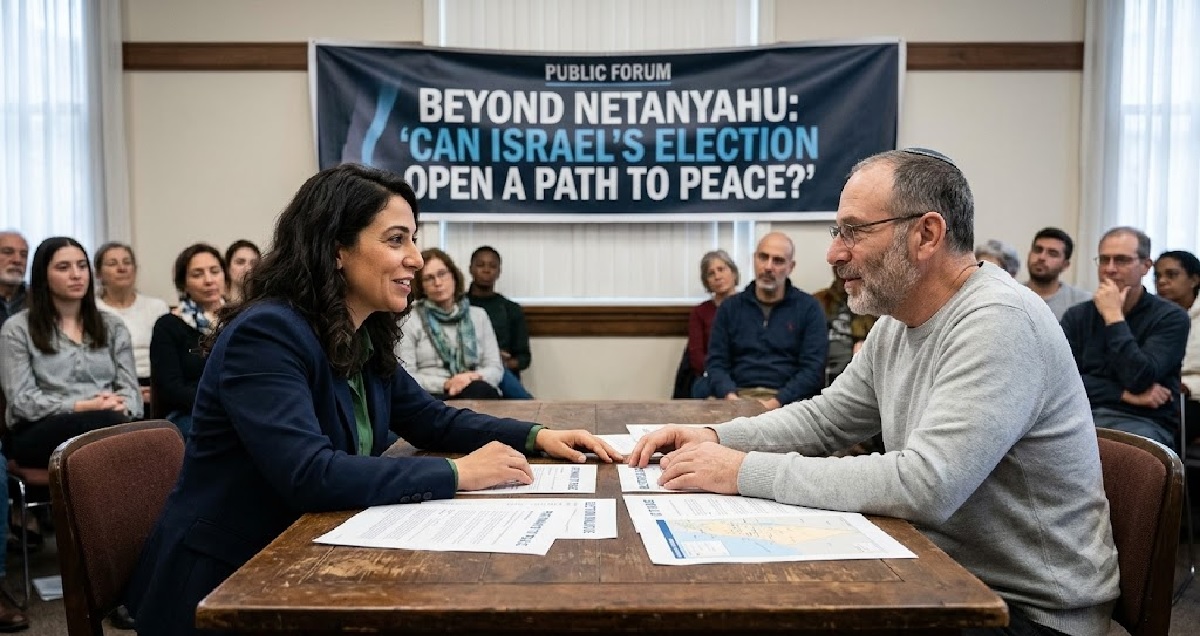
Economic inequality, the political leverage of Arab and Haredi parties and a campaign dominated by security concerns make Israel’s October 27 election a defining moment. A change of government would not automatically end Palestinian suffering, but it could create an opportunity for a more pragmatic policy and renewed efforts towards a two-state solution.
Israel’s Prosperity and the Unfinished Promise of Equality
Israel is a high-income country with considerable strengths in technology, research, defence and innovation. Yet its prosperity is not equally shared. Arab citizens, who constitute approximately one-fifth of Israel’s population, continue to face disadvantages in income, employment, education, infrastructure and access to high-paying occupations. However Arab citizens participate in the parliamentary democracy and Arab-led parties have served in the Knesset. Nevertheless, socioeconomic inequalities and underrepresentation in some influential institutions remain an unfinished task
Socioeconomic Disadvantage: An International Perspective
Economic disparities between majority and minority communities are not unique to Israel. In South Africa, the legacy of apartheid continues to influence wealth, employment, land ownership and educational opportunities. In Malaysia, differences between ethnic communities have been shaped by historical circumstances and public policies. In Brazil, Afro-Brazilians continue to experience disadvantages in income, education and professional advancement.
These situations are not identical. Nor should differences in national per-capita GDP be confused with inequalities between communities within a country. Household income, individual wages, poverty, employment and educational attainment are more appropriate indicators for examining internal disparities.
Israel’s experience reinforces a wider lesson: economic growth does not automatically guarantee equal opportunity. Public policy must address the specific barriers faced by disadvantaged communities.
Three Economic Tiers Within Israeli Society
| Population group | General economic position | Demographic characteristics | Principal economic factors |
|---|---|---|---|
| Non-Haredi Jews | Generally higher incomes | Smaller families on average | Greater participation in higher education and skilled employment; substantial representation in technology, finance and other high-productivity sectors |
| Arab citizens | Substantially lower average incomes | Younger population and larger households on average | Employment-participation gaps, particularly among women; educational and infrastructure deficiencies; concentration in lower-paid occupations |
| Haredi (ultra-Orthodox) Jews | Generally lower household incomes than non-Haredi Jews | Very large families, averaging around six children in some estimates | Lower employment participation among Haredi men, extensive full-time religious study and educational pathways that may limit access to some mainstream occupations |
The Central Bureau of Statistics (CBS) report, titled “Gaps Between Jews and Arabs,” examined differences in demographic characteristics, standards of living, employment, health, welfare services, personal security, crime, education, transportation and the environment. The data is from 2020 and 2021 (Times of Israel, June 20, 2023). Please refer the following table:
| Indicator | Jewish Households / Population | Arab Households / Population |
|---|---|---|
| Households able to cover their expenses (2021) | 76.5% | 53.7% |
| Employment rate among men (2021) | 64.4% | 50.4% |
| Employment rate among women (2021) | 61.6% | 28.3% |
| Average monthly net household income (2021) | NIS 17,779 (US$4,919) | NIS 11,810 (US$3,268) |
| Relative gross household income | 1.6 times that of Arab households | Lower average gross household income |
Note: Population shares and economic comparisons vary by year, source and definition. Household income, income per person and individual wages are different measures and should not be treated as interchangeable.
The economic position of “Ultra Orthodox Haredi Jews” also presents a distinct challenge. Large households, relatively low employment participation among men and limited participation in certain forms of higher education can place pressure on family finances and public expenditure. However unlike Arab Muslims Haredi women have higher employment participation than men.
The objective should not be to stigmatise religious observance. It should be to reconcile religious freedom with access to employment, marketable skills and a sustainable sharing of national responsibilities.
Illustrative International Comparisons of Socioeconomic Disadvantage
| Country | Minority or disadvantaged population | Principal disparities |
|---|---|---|
| South Africa | Black South Africans | Inequalities in wealth, employment, land ownership and education, partly rooted in apartheid |
| Malaysia | Ethnic communities, including Chinese and Indian Malaysians, compared with the Malay/Bumiputera majority | Differences in economic participation, income and educational opportunities, shaped by history and public policy |
| Brazil | Afro-Brazilians | Disparities in income, education, employment and professional advancement compared with white Brazilians |
| Israel | Arab citizens | Lower average wages, employment-participation gaps, infrastructure deficiencies and underrepresentation in some high-paying occupations |
| Israel | Haredi Jews | Lower employment participation among men in some subgroups, large households and challenges accessing certain educational and occupational pathways |
Note: This table is illustrative, not a ranking of communities by per-capita GDP. The countries have different histories, social structures and statistical measures.
Together, the tables demonstrate that disadvantage can persist even in a prosperous economy. Effective remedies must address the particular causes of inequality rather than assume that one policy will suit every community.
Why the October 27 Election Matters
Israel’s election takes place amid regional tensions, the continuing consequences of wars and deep domestic divisions. Disputes over military service, religious authority, public expenditure and the future of the Palestinians have intensified political disagreements.
The outcome will affect more than Benjamin Netanyahu’s political future. It will influence security policy, diplomacy, relations between religious and secular communities, Arab political participation and the prospects for negotiations with the Palestinians.
Netanyahu’s coalition has relied on ultra right-wing and ultra-Orthodox parties. Balancing these demands with wider national interests is difficult. In the 120-member Knesset, a government normally needs the support of at least 61 members. Consequently, smaller parties may wield considerable influence when the major political blocs are closely balanced.
Arab Parties: A Potential kingmaker
Arab citizens make up approximately one-fifth of Israel’s population, but their political influence has not consistently reflected their demographic weight. A significant precedent came in 2021, when Mansour Abbas’s United Arab List (Ra’am) joined a governing coalition. This demonstrated that an Arab-led party could participate formally in government. Amid the existing tensions in the region the tomorrow’s elections is definitely different from the past and likely to produce a closely divided Knesset, Arab parties could gain bargaining power on public safety, housing, education, employment, municipal services and investment in Arab communities.
Haredi Parties and the Coalition Dilemma
Ultra-Orthodox parties also possess considerable bargaining power because of Israel’s coalition system. Their priorities include number of issues such as employment gap, socioeconomic disadvantages, religious education and the protection of religious institutions. Military-service exemptions for sections of the Haredi population have become particularly contentious as Israel faces sustained security demands. The issue raises questions about fairness when the burdens of military service are not shared equally.
The challenge is to develop a fair social contract that respects religious freedom while promoting education, employment and a sustainable distribution of national responsibilities. Arab and Haredi parties are not natural allies of Likud Party and both could hold decisive leverage.
Netanyahu’s Campaign: Security Without a Political Horizon ?
Israel faces genuine security threats. The October 7 attacks, the deaths and suffering they caused, the hostage crisis and continuing regional dangers make the protection of Israeli citizens an essential government responsibility.
Nevertheless, a security-focused campaign should be judged by whether it offers a credible route towards lasting security. Heavy reliance on military confrontation and warnings about external enemies raises questions about diplomacy, domestic unity and the unresolved Palestinian question.
Reports that violent incidents, including a deadly shooting near Hebron, have been used to heighten public anxiety deserve scrutiny, political motives should not be inferred from timing alone; they require supporting evidence.
Military strength can deter threats, but it cannot by itself resolve competing national aspirations, territorial disputes, occupation or the absence of a negotiated settlement. A permanent state of emergency risks making confrontation a substitute for political strategy.
Israel needs serious diplomacy, alongside reforms that strengthen social cohesion and establish a credible political horizon.
International Relations and Israel’s Long-Term Interests
Israel’s international economic connections, scientific partnerships and technological industries are major assets. Prolonged conflict and diplomatic deterioration, however, can affect investment, trade, research cooperation and relations with important partners. Substantive policy decisions, respect for international law, attention to humanitarian concerns and a credible commitment to resolving the Palestinian question would all matter.
A pragmatic foreign policy could improve regional cooperation and help protect Israel’s long-term economic and diplomatic interests.
Could a Change of Government Improve Palestinian Prospects ?
A change of government would have course not automatically end the occupation. Nevertheless, a government less dependent on parties categorically opposed to Palestinian statehood might have greater room to reconsider policy, engage international partners and pursue negotiations.
Any durable settlement must recognise the legitimate national aspirations and security of both Israelis and Palestinians. The political rights of one people cannot be indefinitely denied in the name of the security of the other.
The Two-State Solution: From Principle to Practice
The two-state solution remains an important internationally supported framework for resolving the conflict. Its practical realisation would require negotiations on borders, Jerusalem, settlements, security, refugees, mutual recognition and the creation of a viable, sovereign Palestinian state alongside Israel
The United States, European countries, Arab states and other international partners can support diplomacy, protect civilians, facilitate reconstruction and strengthen institutions necessary for a sustainable settlement. International pressure should be consistent and directed towards clear objectives, while recognising that external pressure cannot replace negotiations.
Both Israeli and Palestinian civilians must be protected. Any political strategy that ignores the security concerns or national aspirations of either population is unlikely to produce lasting peace. A change in Israel’s leadership could open a door, but progress would also depend on regional cooperation and sustained international engagement.
Beyond the Politics of Perpetual Crisis
Israel’s October 27 election is an opportunity to reconsider whether the country can move beyond recurring security emergencies and domestic divisions towards a more inclusive, sustainable and diplomatically constructive future.
The disadvantages experienced by Arab citizens demonstrate that national prosperity does not automatically translate into equal opportunities for all. Similarly, the economic and political challenges associated with Haredi communities highlight the difficulty of reconciling religious traditions with employment, economic self-reliance and national responsibilities. Depending on the election outcome, both communities could gain greater political leverage if the Knesset is closely divided. A change of government could also create an opportunity to reassess policies that deepen domestic divisions, perpetuate conflict and contribute to diplomatic friction, potentially opening the way for a more inclusive and pragmatic approach to governance and peace.
The next government should be judged by measurable commitments: protecting civilians, reducing violence, addressing socioeconomic inequality, avoiding actions that undermine Palestinian statehood and pursuing serious negotiations.
The ultimate test is not simply Netanyahu does not remains in office. It is whether Israel can replace a politics dominated by fear and confrontation with a strategy founded on security, equal citizenship, international cooperation and a just, durable two-state peace.
Principal references
- Israel Democracy Institute, Arab Society Statistical Report 2024.
- The Organisation for Economic Co-operation and Development (OECD) Unlocking Opportunities for Children in Israel.
- OECD, Economic Surveys: Israel 2025.
- European Parliamentary Research Service, analysis of Israel’s political and electoral developments.
OECD is an Intergovernmental Economic Organisation